Hugh II de Bolebec1
M, #2971, d. circa 1165
| Father* | Walter de Bolebec2 d. c 1142 | |
| Mother* | Helewise (?)3 | |
Hugh II de Bolebec|d. c 1165|p100.htm#i2971|Walter de Bolebec|d. c 1142|p69.htm#i2043|Helewise (?)||p512.htm#i15341|Hugh de Bolbec||p512.htm#i15340|||||||||| | ||
| Death* | circa 1165 | 2 |
Family | ||
| Children |
| |
| Last Edited | 22 Jan 2005 |
Alice de Lusignan1
F, #2972, d. May 1290
| Father* | Hugh XI de Lusignan2 b. 1221, d. a 20 Jul 1264 | |
| Mother* | Yolande de Dreux2 b. END OF 1218, d. 10 Oct 1272 | |
Alice de Lusignan|d. May 1290|p100.htm#i2972|Hugh XI de Lusignan|b. 1221\nd. a 20 Jul 1264|p228.htm#i6825|Yolande de Dreux|b. END OF 1218\nd. 10 Oct 1272|p233.htm#i6977|Hugh X. of Lusignan|b. b 1196\nd. a 6 Jun 1249|p97.htm#i2883|Isabella of Angoulême|b. 1188\nd. 31 May 1246|p55.htm#i1621|Pierre d. Dreux|b. 1190\nd. 22 Jun 1250|p135.htm#i4027|Alix de Thouars|b. 1201\nd. 21 Oct 1221|p228.htm#i6820| | ||
| Marriage* | Spring 1253 | 1st=Sir Gilbert de Clare "the Red"1,2,3,4 |
| Divorce | 18 July 1271 | Principal=Sir Gilbert de Clare "the Red"4 |
| Divorce* | before 16 May 1285 | Alice was said to have become hypochondriacal in 1271, Principal=Sir Gilbert de Clare "the Red"3,5 |
| Death* | May 1290 | 2 |
Family | Sir Gilbert de Clare "the Red" b. 2 Sep 1243, d. 7 Dec 1295 | |
| Children |
| |
| Last Edited | 24 Oct 2003 |
Citations
- [S168] Frederick Lewis Weis, Ancestral Roots, 63-30.
- [S218] Marlyn Lewis, Ancestry of Elizabeth of York.
- [S234] David Faris, Plantagenet Ancestry, Clare 11.
- [S284] Douglas Richardson, Plantagenet Ancestry, Montagu 6.
- [S325] Rev. C. Moor, Knights of Edward I, p. 207.
- [S301] Carl Boyer 3rd, Medieval English Ancestors of Robert Abell, p. 60.
 Sir Richard de Clare1
M, #2973, b. 4 August 1222, d. 15 July 1262
 |
| Father* | Sir Gilbert de Clare2,3,4 b. c 1180, d. 25 Oct 1230 | |
| Mother* | Isabel Marshal2,3,4 b. 9 Oct 1200, d. 17 Jan 1239/40 | |
Sir Richard de Clare|b. 4 Aug 1222\nd. 15 Jul 1262|p100.htm#i2973|Sir Gilbert de Clare|b. c 1180\nd. 25 Oct 1230|p100.htm#i2975|Isabel Marshal|b. 9 Oct 1200\nd. 17 Jan 1239/40|p100.htm#i2976|Sir Richard de Clare|b. c 1153\nd. bt 30 Oct 1217 - 28 Nov 1217|p69.htm#i2067|Amice of Gloucester|b. c 1160\nd. 1 Jan 1224/25|p69.htm#i2068|Sir William Marshal|b. 1146\nd. 14 May 1219|p89.htm#i2644|Isabel de Clare|b. 1173\nd. 1220|p100.htm#i2977| | ||
| Charts | Ann Marbury Pedigree |
| Birth* | 4 August 1222 | Gloucester, England1,3,4 |
| Marriage* | 1232 | Principal=Meggotta de Burgh5 |
| Marriage* | circa 25 January 1237/38 | Bride=Maud de Lacy1,3,4,6 |
| Death* | 15 July 1262 | Ashenfield, Canterbury, Kent, England, (of poison at the table of Peter of Savoy, the Queen's uncle)1,3,4,5 |
| Burial* | Tewksbury Abbey, England3 | |
| DNB* | Clare, Richard de, sixth earl of Gloucester and fifth earl of Hertford (1222-1262), magnate, was born on 4 August 1222, the eldest son of Gilbert de Clare, earl of Gloucester and of Hertford (c.1180-1230), and his wife, Isabel, daughter of William Marshal, earl of Pembroke. He had two brothers, William (1228–1258) and Gilbert (b. 1229), both unmarried, and two sisters, Amicia (1220–1283), wife of Baldwin de Revières, earl of Devon (d. 1245), and of Robert de Guines (d. 1283), and Isabel (b. 1226), wife of Robert (V) de Brus (d. 1295), of Annandale. Ward of Hubert de Burgh Richard de Clare was a minor at the time of his father's death, and heir to one of the greatest collections of estates and lordships in all of England and Wales. His wardship and marriage were thus matters of the keenest interest to the politically powerful and ambitious of the day. The justiciar Hubert de Burgh, using his position in the government of Henry III, managed to have custody of Richard assigned to himself. On Hubert's fall from power in 1232, the king transferred custody of both Richard and his lands to the new royal favourites, Peter des Roches, bishop of Winchester, and his nephew Peter des Rivaux. Hubert de Burgh's wife, in an apparent effort to rescue the family fortunes, secretly married Richard de Clare to her daughter Margaret; but the marriage was apparently never consummated, and was in any event mooted by Margaret's death in 1237. In the meantime both Peter des Roches and Peter des Rivaux had themselves fallen from power in 1234, and thereafter King Henry kept the wardship in his own hands, although allowing custody of at least some of the Clare lands to be secured by Richard de Clare's uncle Gilbert Marshal, earl of Pembroke. During this time the king began searching for a suitable marriage. A proposed arrangement with the great French comital family, the Lusignans, fell through, and in 1238 Richard de Clare was married to Maud, daughter of John de Lacy, earl of Lincoln. The prime mover in the marriage negotiations seems to have been the king's brother, Richard of Cornwall, who was Richard de Clare's stepfather, having married the widowed Isabel Marshal in 1231. Notwithstanding his marriage Clare remained the ward of the king until 1243, when he came of age and received both official seisin of his inheritance and formal dubbing to knighthood. The complexities, intricacies, and rivalries involved in the story of Richard de Clare's wardship are an excellent case study of the stakes and resources at issue when contemplating the lives of the upper aristocracy in the thirteenth century. A connection to Richard de Clare was a prize well worth pursuing at full tilt. His inheritance was vast. It included, besides the two comital titles, the English honours of Clare, Gloucester, Tonbridge, and St Hilary, and half of the honour of Giffard, along with the two great marcher lordships of Glamorgan and Gwynllw^g in south Wales. Clare added significantly to this inheritance himself. Upon the partition of the Marshal estates between 1246 and 1247 he obtained, as heir of his mother, Isabel Marshal, an additional important marcher lordship, Usk, and the great Anglo-Irish liberty of Kilkenny. In 1258 and 1259, through a complex series of purchases and exchanges, he also obtained two-thirds of the barony of Southoe Lovetot, Huntingdonshire, and some lucrative properties in Dorset. By this time Richard de Clare was, by every criterion—annual income (close to £4000), knight's fees (nearly 500), and both the sheer number of and the strategic location of his estates and lordships—easily the richest and potentially the most powerful baron, next to the members of the immediate royal family, in the British Isles (excluding Scotland) as a whole. Political career Richard de Clare's political career revolved around two objectives: the drive to ground and consolidate his power on the local level, particularly on the Anglo-Welsh march, where it was most at risk; and then to extend that power on the national level during the early stages of the baronial reform movement beginning in 1258. Initially he focused his efforts and energies on his personal holdings. Surviving evidence suggests a conscientious and successful programme to bureaucratize the management of his English estates, by grouping them into a series of administrative and fiscal units, cutting across honorial lines, with the capita of Clare and Tewkesbury as the privileged headquarters (and residences) for the south-eastern and the south-western properties respectively. Considerably more ingenuity was required to establish efficient control in the Irish lordship of Kilkenny, particularly since Clare probably visited it only twice—briefly in 1247 upon receiving seisin and then for a longer time in 1253. The evidence about its organization in his own lifetime is extremely sparse, but his absenteeism suggests not a lack of interest or control, but rather satisfaction that his administrative arrangements were working well enough to permit substantial autonomy, tempered by periodic visits of officials sent out from his own household. Hardest of all, and most important of all, was the challenge of the marcher lordships. They were the major objects of Clare's interest, because he sensed correctly that they were the truest source of his ability to translate status into power. Cardiff, much more than the manor and castle of Clare, was the true caput and the real base of the role of the Clare family in the history of the thirteenth century. There is evidence that Richard de Clare obtained unofficial seisin of Glamorgan and Gwynllw^g by 1242 or even 1240, and that he immediately launched an aggressive strategy, not so much of administrative structuring but rather of the application of sheer force. The two lordships had been at risk in the 1230s; allied with Llywelyn ab Iorwerth, ruler of Gwynedd, the Welsh dynasts of the upland commotes threatened to reverse the expansion of Clare power initiated by Richard de Clare's father, Earl Gilbert, in the 1220s. The greatest problems were the lords of Afan, Meisgyn and Glynrhondda, and Senghenydd, along with their sometime ally Richard Siward, lord of Llanblethian. By a mix of short wars, strategic castle building, and judicial process, Clare eliminated or neutralized the troublemakers. Richard Siward tried to challenge Richard de Clare's quasi-regal authority in Glamorgan, by bringing a curia regis appeal in 1247: to no avail. The writ that ran in the march was not that of the king of England. Thus by the late 1240s Clare had successfully exerted and demonstrated his superiority, and his position was not to be challenged again until the remaining Welsh lords allied themselves with a resurgent Gwynedd, now led by Llywelyn ap Gruffudd, a decade later. The potential of a new Welsh threat may have prompted, and certainly conditioned, Clare's sudden and decisive appearance on the stage of English national politics from 1258. Until then, thanks to his close ties to his stepfather, Richard of Cornwall, and to King Henry himself, he had confined himself to some highly visible, but stylized and conventional, activities in the cosmopolitan world of élite society. For example, he attended Richard of Cornwall on trips to the continent in 1242 and in 1250, and in 1256–7 went to Germany as an envoy on behalf of his stepfather's candidacy for election as king of the Romans. He made pilgrimages to the shrine of St Edmund of Canterbury at Pontigny in 1248–9 and to Santiago de Compostela in 1250. He accompanied King Henry to France in 1254 for a lengthy stay and went on to Burgos for the marriage of the Lord Edward and Eleanor of Castile in October of that year. On numerous occasions in the late 1240s and early 1250s he travelled to France for tournaments, often in tandem with his younger brother William; some of these trips were discrete enterprises, and some were combined with some of his other activities as just noted. The true significance of these events lies in their timing. It is certainly not coincidental that Richard de Clare's travels (including his stay in Ireland for much of the year 1253) were concentrated in the decade from 1248 to 1257, when he had largely completed his campaign to secure his power in his marcher lordships, and before new problems arose posed by the rise of Llywelyn ap Gruffudd on the one hand, and the baronial reform movement on the other. The baronial revolt Richard de Clare's role in the baronial reform movement was not always consistent, but until his early death in 1262 it was decisive. Whichever side he supported at any given time had the upper hand, and largely for that reason. His strong connections to the royal family help explain his caution and conservatism, but his dissatisfaction with some of Henry's policies and style also prompted his occasional, but sharp, anti-royalist actions. Certainly the failure of the king to act decisively against Llywelyn ap Gruffudd must have contributed to Clare's willingness to anchor the charter group (including Simon de Montfort, Roger (III) Bigod, earl of Norfolk and also a major marcher lord, and five others) whose oath of mutual support in April 1258 led directly to the provisions of Oxford the following June. Perhaps his memory of his experiences as a ward in the 1230s may also have contributed to a feeling that King Henry's capriciousness or wilful stubbornness, in similar cases or as extended into his handling of his international projects, required rebuke and correction. But it is exceedingly doubtful that he ever contemplated with relish or favour the prospect of putting the kingship into a kind of open-ended receivership, or the sweeping sorts of local reforms envisioned in the provisions of Westminster in 1259. And he came quickly to dislike, and increasingly to mistrust, Simon de Montfort's moralistic zeal, coupled with (but not concealing) the earl of Leicester's own acquisitiveness and especially his standing as something of an outsider. When Llywelyn's threat to Glamorgan did not materialize by 1259 or 1260, and when events proved that the reform movement had in fact no fully adequate mechanism to deal with an unwilling king, Richard de Clare came back, firmly, to the royal side. When Henry overplayed his hand by securing papal negation of the two provisions, Clare briefly rejoined Montfort in the spring of 1261, calling for submission of the dispute to arbitration by Louis IX of France. When Henry refused and threatened military action, Clare once again, and for the final time, switched sides. By this time he seems to have fallen ill, and the indications are that he passively accepted, rather than actively supported, the king's actions in late 1261 and 1262, in which, among other steps, he formally annulled the provisions and in their stead reissued Magna Carta. In any event Richard de Clare's death in the summer of 1262 instantly renders pointless any further speculation about actions he might still have undertaken or any influence he might have had in shaping the future course of the reform movement. His record in the period from 1258 to 1261 has been judged harshly by some contemporary chroniclers and by some modern scholars sympathetic to Simon de Montfort; but it is perfectly plausible to understand his actions as having been driven by a series of ad hoc reactions to rapidly changing circumstances, structured around the priorities he clearly gave, during his entire lifetime, both to the political situation on the Welsh march and to his close and multifaceted connections with the royal family. Progeny and death With his wife, Maud de Lacy, Richard de Clare had seven children: three sons and four daughters. Their marriages and careers are instructive of the kinds of élite networking the Clares and other families doggedly pursued. The eldest son and heir, Gilbert de Clare (1243-1295) was married in 1254 to Alice, daughter of Hugues de Lusignan, count of La Marche and Angoulême. While Richard de Clare himself had seen the prospect of a Lusignan marriage fall through in 1238, he did promote (or at least accepted King Henry's promotion of) a Clare–Lusignan connection in the next generation. The second son, Thomas de Clare (1244x7-1287), was a close friend and agent of Edward I, both before his assumption of the throne in the latter stages of the baronial movement and civil war in the 1260s and later in the expansion of English power in Ireland, where he became lord of Thomond. The youngest son, Bogo de Clare (1248-1294), was a notorious and colourful clerical careerist and pluralist. The oldest daughter, Isabel (1240–c.1271), furthered her father's cosmopolitanism by being married to Guillaume, marquess of Montferrat. The second daughter, Margaret (1249–1312), strenghtened Clare ties to the royal family in general, and to Richard of Cornwall in particular, by marriage to the latter's son and heir, Edmund of Cornwall. A connection with the northern baronage came via the marriage of the third daughter, Rose (Rohese) (b. 1252, d. after 1299) to Roger (III) de Mowbray, lord of the Yorkshire barony of Thirsk. Only with their final child, Eglentina, who died shortly after her birth in 1257, did the Clares fail to promote and extend their associations. Richard de Clare died at Eschemerfield, near Canterbury, on 15 July 1262 and was buried two weeks later at Tewkesbury Abbey. The site was appropriate since Tewkesbury was the caput of the honour of Gloucester, the first (and often only) comital title by which Clare was designated in contemporary sources, and also because the annals of Tewkesbury Abbey are the single most valuable literary source for the reconstruction of the family history for this period. Rumours were reported in some other chronicles that Clare was the victim of poisoning (by persons unknown); the silence of the Tewkesbury account on this point strongly indicates that such rumours were unfounded. There had been earlier reports of an attempted poisoning in 1258, supposedly instigated by King Henry's uncle, William de Valence, earl of Pembroke, in retaliation for Clare's support of the baronial reform movement; and Valence's purported agent in the plot, Clare's seneschal, Walter de Scoteny, was tried and hanged. The truth about the 1258 plot remains an open question, but it seems clear that Richard de Clare's death in 1262 was due to natural, if unknown, causes. His widow, Maud, never remarried, and died in 1288 or 1289. Michael Altschul Sources M. Altschul, A baronial family in medieval England: the Clares, 1217–1314 (1965) · M. Altschul, ‘Glamorgan and Morgannwg under the rule of the de Clare family’, Glamorgan county history, ed. G. Williams, 3: The middle ages, ed. T. B. Pugh (1971), 45–72 · J. R. Maddicott, Simon de Montfort (1994) · J. B. Smith, ‘The lordship of Glamorgan’, Morgannw^g, 2 (1958), 9–37 · F. M. Powicke, King Henry III and the Lord Edward: the community of the realm in the thirteenth century, 2 vols. (1947) · G. T. Clark, ed., Cartae et alia munimenta quae ad dominium de Glamorgancia pertinent, ed. G. L. Clark, 6 vols. (1910) · Ann. mon., vol. 1 · Close rolls of the reign of Henry III, 14 vols., PRO (1902–38) · CPR, 1232–72 · inquisition post mortem, PRO, C 132/27/5 · PRO, curia regis rolls, KB 26 Wealth at death see PRO, C 132/27/5; Close rolls of the reign of Henry III, 1261–4, pp. 284–93 © Oxford University Press 2004–5 All rights reserved: see legal notice Oxford University Press Michael Altschul, ‘Clare, Richard de, sixth earl of Gloucester and fifth earl of Hertford (1222-1262)’, Oxford Dictionary of National Biography, Oxford University Press, 2004 [http://www.oxforddnb.com/view/article/5448, accessed 23 Sept 2005] Richard de Clare (1222-1262): doi:10.1093/ref:odnb/54487 | |
| Title* | Earl of Hertford and Gloucester8 | |
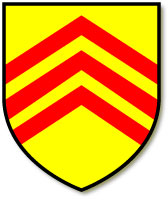
| Arms* | Or. 3 chevrons gu (Matt. Paris I).8  | |
| Summoned* | 15 August 1253 | Gloucester. As he did not come, he was considered a traitor and his lands were laid waste, and a date set for his trial.5 |
| Event-Misc* | 1256 | He founded the house of Black Friars outside the west gate of Cardiff5 |
Family | Maud de Lacy b. 4 Aug 1222, d. b 10 Mar 1288/89 | |
| Children |
| |
| Last Edited | 23 Sep 2005 |
Citations
- [S168] Frederick Lewis Weis, Ancestral Roots, 63-29.
- [S168] Frederick Lewis Weis, Ancestral Roots, 63-28.
- [S218] Marlyn Lewis, Ancestry of Elizabeth of York.
- [S233] Frederick Lewis Weis, Magna Charta Sureties, 28-3.
- [S301] Carl Boyer 3rd, Medieval English Ancestors of Robert Abell, p. 59.
- [S234] David Faris, Plantagenet Ancestry, Clare 11.
- [S376] Unknown editor, unknown short title.
- [S325] Rev. C. Moor, Knights of Edward I, p. 207.
- [S233] Frederick Lewis Weis, Magna Charta Sureties, 33-4.
- [S301] Carl Boyer 3rd, Medieval English Ancestors of Robert Abell, p. 60.
- [S284] Douglas Richardson, Plantagenet Ancestry, Cornwall 4.
- [S233] Frederick Lewis Weis, Magna Charta Sureties, 107-4.
Maud de Lacy1
F, #2974, b. 4 August 1222, d. before 10 March 1288/89
| Father* | John de Lacy2,3,4,5 b. c 1192, d. 22 Jul 1240 | |
| Mother* | Margaret de Quincy2,6,3,4 b. 1208, d. b 30 Mar 1266 | |
Maud de Lacy|b. 4 Aug 1222\nd. b 10 Mar 1288/89|p100.htm#i2974|John de Lacy|b. c 1192\nd. 22 Jul 1240|p70.htm#i2071|Margaret de Quincy|b. 1208\nd. b 30 Mar 1266|p70.htm#i2072|Roger de Lacy of Pontefract|b. c 1171\nd. 1212|p93.htm#i2770|Maud de Clare|b. c 1175\nd. Jan 1225|p134.htm#i4005|Sir Robert de Quincey||p70.htm#i2073|Hawise o. C. (?)|b. 1180\nd. bt 6 Jun 1241 - 3 Mar 1243|p228.htm#i6832| | ||
| Charts | Ann Marbury Pedigree |
| Birth* | 4 August 1222 | Lincolnshire, England6 |
| Marriage* | circa 25 January 1237/38 | 2nd=Sir Richard de Clare1,6,7,5 |
| Death | before 30 March 1265 | 2 |
| Death* | before 10 March 1288/89 | 1,6,8 |
| Title* | Countess of Lincoln8 |
Family | Sir Richard de Clare b. 4 Aug 1222, d. 15 Jul 1262 | |
| Children |
| |
| Last Edited | 8 Jun 2005 |
Citations
- [S168] Frederick Lewis Weis, Ancestral Roots, 63-29.
- [S183] Jr. Meredith B. Colket, Marbury Ancestry, p. 38.
- [S168] Frederick Lewis Weis, Ancestral Roots, 54-29.
- [S233] Frederick Lewis Weis, Magna Charta Sureties, 107-4.
- [S234] David Faris, Plantagenet Ancestry, Clare 11.
- [S218] Marlyn Lewis, Ancestry of Elizabeth of York.
- [S233] Frederick Lewis Weis, Magna Charta Sureties, 28-3.
- [S301] Carl Boyer 3rd, Medieval English Ancestors of Robert Abell, p. 59.
- [S168] Frederick Lewis Weis, Ancestral Roots, 54-31.
- [S301] Carl Boyer 3rd, Medieval English Ancestors of Robert Abell, p. 60.
- [S284] Douglas Richardson, Plantagenet Ancestry, Cornwall 4.
Sir Gilbert de Clare1
M, #2975, b. circa 1180, d. 25 October 1230
 |
| Father* | Sir Richard de Clare2,3,4 b. c 1153, d. bt 30 Oct 1217 - 28 Nov 1217 | |
| Mother* | Amice of Gloucester2,3,4 b. c 1160, d. 1 Jan 1224/25 | |
Sir Gilbert de Clare|b. c 1180\nd. 25 Oct 1230|p100.htm#i2975|Sir Richard de Clare|b. c 1153\nd. bt 30 Oct 1217 - 28 Nov 1217|p69.htm#i2067|Amice of Gloucester|b. c 1160\nd. 1 Jan 1224/25|p69.htm#i2068|Roger de Clare|b. c 1116\nd. 1173|p86.htm#i2569|Maud de St. Hilary|b. c 1132|p86.htm#i2566|Sir William FitzRobert|b. 23 Nov 1121\nd. 23 Nov 1183|p69.htm#i2069|Hawise de Beaumont|b. c 1134\nd. 24 Apr 1197|p100.htm#i2978| | ||
| Birth* | circa 1180 | Hertfordshire, England1,3,4 |
| Marriage* | 9 October 1217 | 1st=Isabel Marshal1,3,5 |
| Death* | 25 October 1230 | Penros, Brittany, France1,3,4 |
| Burial* | Tewkesbury Abbey6 | |
| DNB* | Clare, Gilbert de, fifth earl of Gloucester and fourth earl of Hertford (c.1180-1230), magnate, was the son of Richard de Clare, earl of Hertford (d. 1217), and his wife, Amicia (d. 1225), one of the three coheirs of William, earl of Gloucester. On the death of his father he succeeded to the two comital titles and inherited the honours of Clare and Tonbridge and also the vast Gloucester estates, including the lordships of Glamorgan and Gwynllw^g on the Welsh march. He also inherited the estates of his grandmother, Maud de St Hilaire, and a half of the honour of Giffard from his father, who was one of the coheirs of Rohese, daughter of Walter Giffard, earl of Buckingham. Both Gilbert de Clare and his father were among the twenty-five barons appointed to carry out Magna Carta in June 1215, and both were excommunicated by Innocent III at the beginning of 1216. After the death of John, Gilbert sided with Louis of France, but after the battle of Lincoln he was reconciled with the royalists led by William (I) Marshal, earl of Pembroke, who had married him to his daughter Isabel in 1214. Earl Gilbert's public career was framed by the minority of Henry III. He played only a secondary role, his prominence being secured more by his landed status and family marriage connections than by any particular desire or capacity for leadership. In February 1225 he was present at the confirmation of Magna Carta at Westminster. Two years later he sided with Richard, earl of Cornwall, in his quarrel with the king, demanding a renewal of the forest acts and ascribing all the faults of the government to Hubert de Burgh. About May 1230 he attended Henry III abroad on his expedition to Brittany, but died there at Penros on 25 October 1230. He seems to have made his first will before starting on this campaign on 30 April 1230 at Southwick, and his second, just before his death, on 23 October. His body was conveyed to Plymouth, and thence, by way of Cranborne, to Tewkesbury Abbey, where he was buried before the great altar on the Sunday following St Martin's day, in the presence of an ‘innumerable gathering’ (annals of Tewkesbury, Ann. mon., 1.76). He was a great benefactor of Tewkesbury Abbey during his lifetime, and bequeathed it a silver cross and the ‘wood of Mutha’. His widow Isabel set up a memorial stone dated 28 September 1231. In the course of the same year she married Richard, earl of Cornwall. Isabel died on 17 January 1240, and was buried at Beaulieu. Her heart, however, was brought to Tewkesbury by the prior in a silver gilt casket and interred before the great altar. Gilbert and Isabel had three sons: Richard de Clare (1222-1262), William (1228–1258), and Gilbert (b. 1229); and two daughters: Amicia (1220–1283), who in October 1226 was betrothed to Baldwin de Revières; and Isabel, born on 2 November 1226, who married Robert (V) de Brus of Annandale. The lordship of Glamorgan became the true centre of Earl Gilbert's power and priorities. His greatest energies were spent in military efforts, still incomplete at his death, to secure territorial control of the Welsh uplands. His major opponents were first Morgan Gam, lord of Afan, and, after Morgan's capture in 1228, Hywel ap Maredudd, lord of Meisgyn and Glynrhondda. T. A. Archer, rev. Michael Altschul Sources M. Altschul, A baronial family in medieval England: the Clares, 1217–1314 (1965) · M. Altschul, ‘Glamorgan and Morgannwg under the rule of the de Clare family’, Glamorgan county history, ed. G. Williams, 3: The middle ages, ed. T. B. Pugh (1971), 45–72 · J. B. Smith, ‘The lordship of Glamorgan’, Morgannwg, 2 (1958), 9–37 · D. A. Carpenter, The minority of Henry III (1990) · I. J. Sanders, English baronies: a study of their origin and descent, 1086–1327 (1960) · Ann. mon., vols. 1, 2 · Paris, Chron. Likenesses memorial stone, Tewkesbury Abbey Wealth at death wealthy © Oxford University Press 2004–5 All rights reserved: see legal notice Oxford University Press T. A. Archer, ‘Clare, Gilbert de, fifth earl of Gloucester and fourth earl of Hertford (c.1180-1230)’, rev. Michael Altschul, Oxford Dictionary of National Biography, Oxford University Press, 2004 [http://www.oxforddnb.com/view/article/5437, accessed 23 Sept 2005] Gilbert de Clare (c.1180-1230): doi:10.1093/ref:odnb/54377 | |
| Note* | He inherited the Clare estates from his father, those of Goucester from his mother, the honor of St. Hilary from his grandmother, and a moiety of the Giffard estates through his ancestress Rohese6 | |
| Title* | Earl of Hertford and Gloucester8 | |
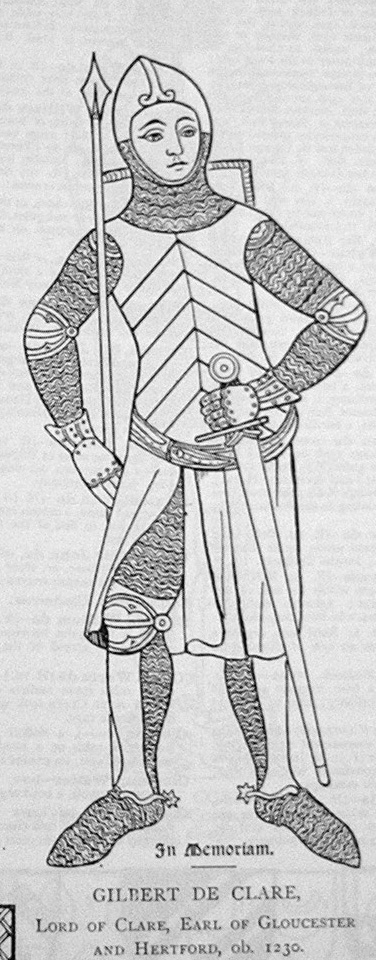
| Arms* | Sealed: Three Chevrons (Birch)9 | |
| Feudal* | June 1202 | Harfleur and Mostrevilliers6 |
| Feudal* | 1211 | 6 Kts. Fee in Kent, Principal=Amice of Gloucester6 |
| (Barons) Magna Carta | 12 June 1215 | Runningmede, Surrey, England, King=John Lackland10,11,12,13,14,15 |
| Excommunication* | 1216 | by Pope Innocent III, Principal=Sir Richard de Clare16 |
| (Louis) Battle-Lincoln-1217 | 19 May 1217 | Lincoln, Sir William Marshall routed the rebel barons and the French, Principal=Sir William Marshal, Principal=Louis VIII "le Lion" of France6,17 |
| Event-Misc* | November 1217 | He was recognized as Earl of Gloucester in right of his maternal descent6 |
| Event-Misc* | 1223 | Gilbert de Clare accompanied William Marshal, his brother-in-law on an expedition to Wales, Principal=Sir William Marshal6 |
| Event-Misc | 1225 | He was present when Henry III confirmed the Magna Carta6 |
| Event-Misc | July 1227 | He supported Richard, Earl of Cornwall in a dispute with Henry III over the forest laws and misgovernment by Hubert de Burgh, Witness=Henry III Plantagenet King of England, Witness=Hubert de Burgh, Witness=Richard of England6 |
| Event-Misc | 1228 | He led an army against the Welsh and captured Morgan Gam6 |
Family | Isabel Marshal b. 9 Oct 1200, d. 17 Jan 1239/40 | |
| Children |
| |
| Last Edited | 23 Sep 2005 |
Citations
- [S168] Frederick Lewis Weis, Ancestral Roots, 63-28.
- [S183] Jr. Meredith B. Colket, Marbury Ancestry, p. 38.
- [S218] Marlyn Lewis, Ancestry of Elizabeth of York.
- [S233] Frederick Lewis Weis, Magna Charta Sureties, 28-3.
- [S233] Frederick Lewis Weis, Magna Charta Sureties, 145-2.
- [S347] Carl Boyer 3rd, Medieval English Ancestors of Certain Americans, p. 55.
- [S376] Unknown editor, unknown short title.
- [S338] Frederick Lewis Weis, Ancestral Roots, 8th ed., 63-28.
- [S325] Rev. C. Moor, Knights of Edward I, p. 207.
- [S284] Douglas Richardson, Plantagenet Ancestry, Longespée 3.
- [S284] Douglas Richardson, Plantagenet Ancestry, Warenne 3.
- [S338] Frederick Lewis Weis, Ancestral Roots, 8th ed., 56-27.
- [S338] Frederick Lewis Weis, Ancestral Roots, 8th ed., 60-28.
- [S347] Carl Boyer 3rd, Medieval English Ancestors of Certain Americans, p. 8.
- [S347] Carl Boyer 3rd, Medieval English Ancestors of Certain Americans, p. 34.
- [S347] Carl Boyer 3rd, Medieval English Ancestors of Certain Americans, p. 54.
- [S347] Carl Boyer 3rd, Medieval English Ancestors of Certain Americans, p. 148.
- [S233] Frederick Lewis Weis, Magna Charta Sureties, 41-3.
Isabel Marshal1
F, #2976, b. 9 October 1200, d. 17 January 1239/40
 |
| Father* | Sir William Marshal1,2,3,4 b. 1146, d. 14 May 1219 | |
| Mother* | Isabel de Clare1,2,3,4,5 b. 1173, d. 1220 | |
Isabel Marshal|b. 9 Oct 1200\nd. 17 Jan 1239/40|p100.htm#i2976|Sir William Marshal|b. 1146\nd. 14 May 1219|p89.htm#i2644|Isabel de Clare|b. 1173\nd. 1220|p100.htm#i2977|John FitzGilbert (?)|b. c 1106\nd. b Michaelmas in 1165|p89.htm#i2641|Sybil de Salisbury|b. c 1120|p89.htm#i2642|Richard de Clare "Strongbow"|b. c 1130\nd. c 20 Apr 1176|p101.htm#i3014|Aoife MacDairmait|b. c 1140|p101.htm#i3015| | ||
| Birth* | 9 October 1200 | Pembroke Castle, Pembrokeshire, Wales2,4,5 |
| Marriage* | 9 October 1217 | Groom=Sir Gilbert de Clare1,2,3 |
| Marriage* | 30 March 1231 | Fawley, Buckinghamshire, England, 1st=Richard of England2,4,5 |
| Death* | 17 January 1239/40 | Berkhampstead, Hertfordshire, England, in childbirth1,2,3,4,5 |
| Burial* | Beaulieu Abbey, Hampshire, England5 | |
| Name Variation | Isabel Mareschal2 |
Family 1 | Sir Gilbert de Clare b. c 1180, d. 25 Oct 1230 | |
| Children |
| |
Family 2 | Richard of England b. 5 Jan 1209, d. 2 Apr 1272 | |
| Children |
| |
| Last Edited | 26 Sep 2004 |
Citations
- [S168] Frederick Lewis Weis, Ancestral Roots, 63-28.
- [S218] Marlyn Lewis, Ancestry of Elizabeth of York.
- [S233] Frederick Lewis Weis, Magna Charta Sureties, 145-2.
- [S234] David Faris, Plantagenet Ancestry, Plantagenet 16.
- [S284] Douglas Richardson, Plantagenet Ancestry, Cornwall 4.
- [S347] Carl Boyer 3rd, Medieval English Ancestors of Certain Americans, p. 55.
- [S233] Frederick Lewis Weis, Magna Charta Sureties, 28-3.
Isabel de Clare1
F, #2977, b. 1173, d. 1220
| Father* | Richard de Clare "Strongbow"2,3,4 b. c 1130, d. c 20 Apr 1176 | |
| Mother* | Aoife MacDairmait2,3 b. c 1140 | |
Isabel de Clare|b. 1173\nd. 1220|p100.htm#i2977|Richard de Clare "Strongbow"|b. c 1130\nd. c 20 Apr 1176|p101.htm#i3014|Aoife MacDairmait|b. c 1140|p101.htm#i3015|Gilbert de Clare|b. 1100\nd. 6 Jan 1147/48|p101.htm#i3017|Isabel de Beaumont|b. c 1100|p101.htm#i3020|Dairmait MacMurchada|d. 1 Jan 1171|p101.htm#i3016|Mor O'Toole|d. 1164|p334.htm#i10006| | ||
| Birth* | 1173 | of Pembroke, Pembrokeshire, Wales3 |
| Marriage* | August 1189 | London, Middlesex, England, Principal=Sir William Marshal5,6,7 |
| Death* | 1220 | Pembroke, Pembrokeshire, England5,3 |
| Burial* | Tinturn Abbey8 | |
| DNB* | Clare, Isabel de, suo jure countess of Pembroke (1171x6-1220), magnate, was the daughter of Richard fitz Gilbert de Clare (c.1130-1176), lord of Striguil (1148–76) and of Leinster (1171–6), and Aífe (Eva), daughter of Diarmait Mac Murchada (Dermot Mac Murrough), king of Leinster (d. 1171). Isabel was born some time after the marriage of Richard de Clare and Aífe in August 1170 and before Richard's death in April 1176. Her brother, Gilbert (b. 1173), died as a minor between 1185 and 1189, and she became sole heir to her father's estates in England, Normandy, south Wales, and Leinster. Shortly before Henry II's death in 1189 the king offered Isabel in marriage to William (I) Marshal (c.1146-1219); King Richard subsequently gave his assent. In August 1189 the Marshal collected Isabel from Ranulf de Glanville's household in London, where they were immediately married. Isabel and William Marshal had five sons, William (II) Marshal (c.1190-1231), Richard Marshal (d. 1234), Gilbert, Walter, and Anselm, and five daughters, Mathilda, Isabel, Sybil, Eve, and Joan. In the spring of 1207 Isabel and William Marshal took up residence on her estates in Leinster. The Histoire de Guillaume le Maréchal depicts her as a personality in her own right in Ireland, and she may have been instrumental in persuading William to attend to her Irish lordship. She participated in the council of the Marshal's men at Chepstow before their departure for Ireland, when she argued against the delivery of their second son, Richard, as a hostage to King John. Following their arrival in Ireland a dispute arose with Meiler fitz Henry, a tenant of William Marshal in Leinster, but who was also King John's justiciar. Meiler engineered William Marshal's summons to John's court, forcing him to leave Leinster vulnerable to a possible incursion by the justiciar's forces. Isabel, being pregnant, did not travel with the Marshal and was entrusted to the care of knights of his household; it may have been less her condition than her wish to protect her inheritance in Leinster which detained her in Ireland. During the Marshal's absence a number of his Leinster vassals, including Philip de Prendergast and David de la Roche, sided with the justiciar and accepted lands from King John; the Histoire describes Isabel as opposed to her husband's decision to pardon them when he returned to Ireland. Isabel had her own chaplain, Walter, and her own clerk, Robert. She was depicted on her seal in a standard contemporary pose: full face, standing, in tight-fitting dress, pointed head-dress, and long cloak, with a falcon on her left wrist. When making his will just before his death in 1219 William Marshal determined that the lands which he had enjoyed in right of his wife would revert to her for the duration of her life, while his eldest son, William, would receive his patrimonial and other acquired lands. The Histoire depicts a touching deathbed scene of the Marshal taking leave of his belle amie, when they embraced and wept together. While her husband's body was resting at Reading Abbey, she donated an annual grant of 100 shillings for his soul. Isabel made an agreement with the king of France that she and her children should keep the property to which William Marshal was seised on the day of his death. She died in 1220 and was buried in Tintern Abbey, Wales. M. T. Flanagan Sources P. Meyer, ed., L'histoire de Guillaume le Maréchal, 3 vols. (Paris, 1891–1901) · J. H. Round, ed., Rotuli de dominabus et pueris et puellis de XII comitatibus (1185), PRSoc., 35 (1913), 66, 76 · J. T. Gilbert, ed., Chartularies of St Mary's Abbey, Dublin: with the register of its house at Dunbrody and annals of Ireland, 2, Rolls Series, 80 (1884), 142–3 · Birch, Seals, vol. 2, no. 6682 · L. Deslisle, ed., Catalogue des actes de Philippe-Auguste (Paris, 1856), no. 1918 · GEC, Peerage · C. M. Butler and J. H. Bernard, eds., ‘The charters of the Cistercian abbey of Duiske in the county of Kilkenny’, Proceedings of the Royal Irish Academy, 35C (1918–20), 1–188 · T. D. Hardy, ed., Rotuli litterarum clausarum, 2 vols., RC (1833–4) · C. Roberts, ed., Excerpta è rotulis finium in Turri Londinensi asservatis, Henrico Tertio rege, AD 1216–1272, 2 vols., RC, 32 (1835–6), 3.34 © Oxford University Press 2004–5 All rights reserved: see legal notice Oxford University Press M. T. Flanagan, ‘Clare, Isabel de, suo jure countess of Pembroke (1171x6-1220)’, Oxford Dictionary of National Biography, Oxford University Press, 2004 [http://www.oxforddnb.com/view/article/47208, accessed 23 Sept 2005] Isabel de Clare (1171x6-1220): doi:10.1093/ref:odnb/472089 |
Family | Sir William Marshal b. 1146, d. 14 May 1219 | |
| Children |
| |
| Last Edited | 23 Sep 2005 |
Citations
- [S168] Frederick Lewis Weis, Ancestral Roots, 63-28.
- [S168] Frederick Lewis Weis, Ancestral Roots, 66-26.
- [S218] Marlyn Lewis, Ancestry of Elizabeth of York.
- [S284] Douglas Richardson, Plantagenet Ancestry, Cornwall 4.
- [S168] Frederick Lewis Weis, Ancestral Roots, 66-27.
- [S233] Frederick Lewis Weis, Magna Charta Sureties, 145-1.
- [S234] David Faris, Plantagenet Ancestry, Plantagenet 16.
- [S347] Carl Boyer 3rd, Medieval English Ancestors of Certain Americans, p. 147.
- [S376] Unknown editor, unknown short title.
- [S347] Carl Boyer 3rd, Medieval English Ancestors of Certain Americans, p. 149.
- [S168] Frederick Lewis Weis, Ancestral Roots, 69-28.
- [S233] Frederick Lewis Weis, Magna Charta Sureties, 145-2.
- [S168] Frederick Lewis Weis, Ancestral Roots, 80-27.
Hawise de Beaumont1
F, #2978, b. circa 1134, d. 24 April 1197
| Father* | Sir Robert de Beaumont2,3 b. 1104, d. 5 Apr 1168 | |
| Mother* | Amice de Montfort2,3 d. a 31 Aug 1168 | |
Hawise de Beaumont|b. c 1134\nd. 24 Apr 1197|p100.htm#i2978|Sir Robert de Beaumont|b. 1104\nd. 5 Apr 1168|p100.htm#i2979|Amice de Montfort|d. a 31 Aug 1168|p92.htm#i2750|Robert de Beaumont|b. 1049\nd. 5 Jun 1118|p92.htm#i2754|Isabel de Vermandois|b. 1081\nd. 13 Feb 1131|p64.htm#i1915|Ralph de Gael de Montford|b. 1080\nd. 1143|p92.htm#i2751|Avice Waer||p113.htm#i3384| | ||
| Birth* | circa 1134 | Leicester, Norfolk, England3 |
| Marriage* | circa 1150 | Principal=Sir William FitzRobert1,3 |
| Death* | 24 April 1197 | 3,4 |
Family | Sir William FitzRobert b. 23 Nov 1121, d. 23 Nov 1183 | |
| Children |
| |
| Last Edited | 10 Jul 2005 |
Sir Robert de Beaumont1
M, #2979, b. 1104, d. 5 April 1168
| Father* | Robert de Beaumont4,3 b. 1049, d. 5 Jun 1118 | |
| Mother* | Isabel de Vermandois2,3 b. 1081, d. 13 Feb 1131 | |
| Mother | Amice de Montfort2,3 d. a 31 Aug 1168 | |
Sir Robert de Beaumont|b. 1104\nd. 5 Apr 1168|p100.htm#i2979|Robert de Beaumont|b. 1049\nd. 5 Jun 1118|p92.htm#i2754|Isabel de Vermandois|b. 1081\nd. 13 Feb 1131|p64.htm#i1915|Roger de Beaumont|b. c 1022\nd. 29 Nov 1094|p113.htm#i3385|Adeline de Meulan|b. c 1014\nd. 8 Apr 1081|p113.htm#i3386|Hugh Magnus of France|b. 1057\nd. 18 Oct 1101|p64.htm#i1916|Adelaide de Vermandois|b. c 1062\nd. 28 Sep 1124|p64.htm#i1917| | ||
| Marriage* | Principal=Amice de Montfort5 | |
| Birth* | 1104 | Robert and Waleran were twins1,3,6 |
| Marriage | after November 1120 | Principal=Amice de Montfort2,3,6 |
| Death* | 5 April 1168 | 1,3,6 |
| Burial* | Leicester Abbey, England, after having lived for fifteen years a canon regular in the abbey3,7 | |
| DNB* | Robert [Robert de Beaumont], second earl of Leicester (1104-1168), magnate and justiciar, was the son of Robert de Beaumont, count of Meulan and earl of Leicester (d. 1118), and Isabel (d. 1147), daughter of Hugues, count of Vermandois. Robert was born one of twins, according to Orderic Vitalis. It is likely that he was the younger twin, as the other, Waleran, count of Meulan, had control of the marriage of their sisters and inherited the marriage portion of their mother at Elbeuf (Eure). An Abingdon source claims that Earl Robert spent part of his childhood at the abbey. This is possible, but the Abingdon source is in error in that it dates the earl's education in the abbey to the reign of William II, for Robert and his elder twin were under age when their father died in 1118. They passed into royal wardship and their lands into the hands of their stepfather, William (II) de Warenne, earl of Surrey, and Nigel d'Aubigny, assisted by their late father's steward and his butler. The twins were kept at court, and appeared in Henry I's entourage at Gisors in 1119, when the king incited them to debate philosophy with the cardinals accompanying Calixtus II. They were knighted and came of age at sixteen in 1120, before October, and Robert succeeded formally to the earldom of Leicester (though he already styled himself earl), and the bulk of his father's English lands, apart from some property in Winchester and Dorset. The young Earl Robert was married (c.1121) to Amice, daughter of Ralph de Gael and heir of the great Norman honour of Breteuil. He failed to support his elder twin in Waleran's rebellion against King Henry in 1123, and throughout the reign behaved as a dutiful, curial earl. In 1129 he was rejoined by Waleran at court, after the count's release from imprisonment. The pipe roll of 1130 reveals him in high favour, obtaining exemptions for himself and his followers. In 1135 the twins were in Normandy, and attended the deathbed of the king in December. Earl Robert was one of the magnates who attended the Easter court of 1136 supporting the new king, Stephen, and he accompanied his elder twin to Normandy soon afterwards, acting as Waleran's lieutenant in the count's attempts to defeat Angevin incursions into the duchy. He also had to fight a private war against Guillaume de Pacy, whose father had been dispossessed of the honour of Breteuil in 1118, and who was attempting to reclaim it in alliance with the Angevins and the Tosny family. Earl Robert is said to have persuaded his brother to attack the Tosny centre of Pont St Pierre (formerly part of the Breteuil inheritance) which was successfully seized and handed over to the earl. The earl engaged in other enterprising activities at this time, seizing lands of the abbey of Bernay in central Normandy. Earl Robert was still in Normandy in March 1137, when King Stephen arrived in the duchy. He accompanied the royal progress through the duchy, and returned with the king to England in November. In his absence his Norman honour of Breteuil was shaken by internal conflict, which led to the sack of the town of Breteuil by the Tosnys and disaffected Breteuil tenants in September 1138. Earl Robert had returned from England about May, with his brother, and the twins were able in November to capture Roger de Tosny, the rebel leader. A settlement was eventually arranged by which Roger's son married a daughter of Earl Robert, who then returned to England with his brother. He remained in England through 1139, and profited from the downfall of the bishops in June, picking up Alexander of Lincoln's castle of Newark, and apparently also confiscating on his own account the urban and suburban estates of the bishop in Leicester, events which caused the earl's excommunication. In August Earl Robert lost Wareham and his Dorset estates to the invading pro-Angevin forces, and it may be that the grant of Herefordshire made to Earl Robert in 1140 by King Stephen was to compensate for this as much as to reassert Stephen's rule in the shire. But before the end of the year Robert was back in Normandy, acting with Rotrou, count of Perche, to contain the attacks of Geoffrey of Anjou in central Normandy. The collapse of the royalist party following Stephen's capture at the battle of Lincoln in February 1141 led to a swift surrender in Normandy. Before the end of that year Earl Robert was back in England, having lost his Norman estates to his rival, Guillaume de Pacy. Between 1141 and 1153 the earl's best endeavours seem to have been devoted to the extension of his power in the midlands by military and diplomatic means. He successfully broke the power of the earls of Chester in the Soar valley and Charnwood in Leicestershire, and he dispossessed the bishops of Lincoln of their Leicester estate. Private treaties later consolidated these gains. At the same time he made advantageous alliances with the pro-Angevin magnates, the earls of Gloucester and Hereford, probably with the intention of maintaining his brother's influence in Worcestershire. In 1151 or 1152 he joined a royal army besieging Worcester and frustrated its attempts to take the castle, his brother's possession. He was already a semi-detached member of King Stephen's party, and when Duke Henry arrived in England in 1153, Earl Robert was one of the few to switch sides, rather than work for a peaceful settlement within Stephen's court. He had joined the duke in the Severn valley by May. By June he was clearly regarded as one of the duke's leading counsellors, advising the duke to attack Tutbury and reduce the earl of Derby to obedience. The earl's adherence brought the rewards he had no doubt wished for and solicited. His great Norman possessions were returned to him—easily done as Guillaume de Breteuil-Pacy had died without heirs earlier in 1153. The earl doubtless played a large part in the negotiations that led to the treaty of Winchester, and accompanied the duke back to Normandy just before Easter 1154. He was still with the duke in October 1154 when news of King Stephen's death reached them. Earl Robert returned for the coronation of the new king, and it was soon after this that he received his appointment as justiciar of England, an office he held until his death. Further gains came to the Leicester family a year or two later, when the earl's son and heir, Robert de Breteuil, was given the marriage of Petronilla, heir of the central Norman honour of Grandmesnil. There is abundant evidence that the earl discharged his office at the exchequer and on the bench whether or not the king was in England. At Northampton in 1164 it was Earl Robert, with Reginald of Cornwall, who announced to Thomas Becket the sentence of the curia regis against him. It was to Earl Robert, as head of the baronage, that Becket addressed his justification of his position. Later the earl received from Becket a threat of excommunication, which does not seem to have been carried out. Earl Robert died at Leicester on 5 April 1168, and was buried in the choir of his foundation of Leicester Abbey, in front of and to the north of the high altar. His embalmed heart was sent for burial to another foundation, Brackley Hospital. There are references to a testament, of which his son was an executor. The earl's widow, Countess Amice, entered Nuneaton Priory and took the veil. She died and was buried there at some unknown time. The earl left only one son, Robert de Breteuil. John Nichols refers to Richard, first abbot of Leicester, as another son, but this is simply an unwarranted interpretation of a ‘Robert, brother of the abbot’, as having been Robert de Breteuil. A daughter, Isabel, married Simon (II) de Senlis, earl of Northampton and of Huntingdon. Hawise, another daughter, married William, earl of Gloucester. Earl Robert was perhaps the most distinguished aristocrat of his day, educated to a high standard and a consummate politician and man of action. The curia regis seems to have been the place where he was happiest. He was a founder of two abbeys—Garendon (1133), a foundation which shows him to have been one of the earliest patrons of the Cistercian order in England, and Leicester (1138–9)—and of several hospitals and priories. His abbey foundations were, however, economical, employing the lands of other people, as at Garendon, or, in the case of Leicester, lands already given by his father to the church. David Crouch Sources Ordericus Vitalis, Eccl. hist. · K. R. Potter and R. H. C. Davis, eds., Gesta Stephani, OMT (1976) · J. Nichols, The history and antiquities of the county of Leicester, 4 vols. (1795–1815) · D. Crouch, The Beaumont twins: the roots and branches of power in the twelfth century, Cambridge Studies in Medieval Life and Thought, 4th ser., 1 (1986) · D. Crouch, ‘The foundation of Leicester Abbey’, Midland History, 11 (1987), 1–13 · E. King, ‘Mountsorrel and its region in King Stephen's reign’, Huntington Library Quarterly, 44 (1980–81), 1–10 · D. Crouch, ‘Earls and bishops in twelfth-century Leicestershire’, Nottingham Medieval Studies, 37 (1993), 9–20 © Oxford University Press 2004–5 All rights reserved: see legal notice Oxford University Press David Crouch, ‘Robert , second earl of Leicester (1104-1168)’, Oxford Dictionary of National Biography, Oxford University Press, 2004 [http://www.oxforddnb.com/view/article/1882, accessed 23 Sept 2005] Robert (1104-1168): doi:10.1093/ref:odnb/18828 | |
| Name Variation | "le Bossu" or "le Goczen"6 | |
| Event-Misc | November 1119 | The twin brothers accompanied King Henry I when he interviewed Pope Calixuts at Gisors, where the cardinals were astonished at their learning., Principal=Waleran de Beaumont6 |
| Knighted* | 1122 | 2 |
| Event-Misc* | 8 September 1131 | He witnessed Henry's charter to Salisbury at the Northampton Council6 |
| Note* | 1135 | "This nobleman stoutly adhering to King Henry I. upon all occasions, was with that monarch at his decease in 1135, and he afterwards as staunchly supported the interests of his grandson, Henry II., upon whose accession to the throne, his lordship was constituted Justice of England."7 |
| Event-Misc* | June 1139 | Oxford, The Beaumont twins were leaders in the seizure of the Bishops of Salisbury and Lincoln, Principal=Waleran de Beaumont6 |
| Event-Misc | 2 February 1141 | He was a partisan of King Stephen, but made peace with the Angevins after Stephen's defeat6 |
| Event-Misc | 1143 | Leicester, He founded St. Mary de Pré6 |
| Note | During the reign of King Stephen, Robert de Beaumont waged a private war with his enemy, Roger de Tosny, who was captured with the help of Waleran de Beaumont. However, his Norman possessions were overrun and he had to come to terms with de Tosny., Principal=Roger III de Tony6 | |
| Event-Misc* | 1153 | Henry Plantagenet granted Robert and his son Robert the Stewardship of England and Normandy, Principal=Sir Robert de Beaumont6 |
| Event-Misc | October 1154 | He was present at the siege of Torigny6 |
| Event-Misc | December 1154 | He was present at the coronation of King Henry II6 |
| Occupation* | between 1155 and 1168 | Justiciar of England2 |
| Event-Misc | January 1163/64 | He attended the Council of Clarendon and was the first to attest the "Constitutions," to which he obtained the assent of Thomas Becket, Archibishop of Canterbury.6 |
| Event-Misc | October 1164 | He attempted to reconcile Thomas Becket and King Henry II, which failed. As justiciar, it was he who pronounced sentence upon Becket, who denied the juristiction of the court.6 |
| Title* | 2nd Earl of Leicester1 |
Family | Amice de Montfort d. a 31 Aug 1168 | |
| Children |
| |
| Last Edited | 23 Sep 2005 |
Citations
- [S168] Frederick Lewis Weis, Ancestral Roots, 63-25.
- [S168] Frederick Lewis Weis, Ancestral Roots, 53-25.
- [S218] Marlyn Lewis, Ancestry of Elizabeth of York.
- [S168] Frederick Lewis Weis, Ancestral Roots, 53-24.
- [S78] Louise Brownell Clarke, Greenes of Rhode Island, p. 10.
- [S347] Carl Boyer 3rd, Medieval English Ancestors of Certain Americans, p. 18.
- [S342] Sir Bernard Burke, Extinct Peerages, p. 42.
- [S376] Unknown editor, unknown short title.
- [S347] Carl Boyer 3rd, Medieval English Ancestors of Certain Americans, p. 19.
Walter de Balun1
M, #2980, b. circa 1225, d. before 25 November 1288
| Marriage* | (without issue), 1st=Isolde de Mortimer1,2,3 | |
| Birth* | circa 1225 | 4 |
| Death* | before 25 November 1288 | (Inq.)5 |
| Last Edited | 20 Oct 2004 |
 Sir James de Audley1
M, #2981, b. circa 1220, d. circa 11 June 1272
 |
| Father* | Henry de Audley2,3,4 b. 1175, d. shortly before Nov 1246 | |
| Mother* | Bertrea Mainwaring2,3 b. c 1190, d. a 1249 | |
Sir James de Audley|b. c 1220\nd. c 11 Jun 1272|p100.htm#i2981|Henry de Audley|b. 1175\nd. shortly before Nov 1246|p236.htm#i7072|Bertrea Mainwaring|b. c 1190\nd. a 1249|p236.htm#i7073|Adam de Aldithley|b. c 1145\nd. bt 1203 - 1211|p107.htm#i3184|Emma de Derleveston|b. c 1150|p107.htm#i3185|Sir Ralph le Mesnilwarin||p236.htm#i7074|Amicia de Meschines|b. c 1178|p236.htm#i7075| | ||
| Charts | Ann Marbury Pedigree |
| Mistress* | Principal=Alice de Mohun5 | |
| Birth* | circa 1220 | 2,6,3 |
| Marriage* | 1244 | Principal=Ela Longespée1,2,6,7,5,3 |
| Death* | circa 11 June 1272 | Ireland, (of a broken neck)8,5,9 |
| Title* | Sheriff of Salop and Staffordshire5 | |
| Note* | He was a favorite of Richard, Earl of Cornwall, and assisted him at his corornation as King of the Romans., Witness=Richard of England4 | |
| DNB* | Audley, James (d. 1272), magnate, was the son and heir of Henry Audley and Bertred, daughter of Ralph Mainwaring, county justice of Chester. He had paid homage to Henry III for his father's lands by 19 November 1246. He had one brother, Ralph (d. before 1240), and his sister Alice married Peter de Montfort. In 1244 Audley married Ela (d. 1299) daughter of William (II) Longespée (c.1209-1250), claimant to the earldom of Salisbury and cousin of Henry III. The couple had five sons, James, Henry, William, Nicholas, and Hugh, who succeeded to the family estates, which were overwhelmingly concentrated in Staffordshire, Shropshire, and Cheshire. Audley's service to the crown began in 1250, when he was appointed keeper of the town and castle of Newcastle under Lyme, and was commissioned to settle a dispute in the Welsh marches concerning Fulk Fitzwarine and Thomas Corbet. Similar commissions followed in the next few years. On 29 April 1257 he accompanied Richard, earl of Cornwall, at his coronation as king of the Romans at Aachen. The Welsh took advantage of his absence and ravaged his estates, but he exacted particularly savage retribution on his return, around Michaelmas 1257. Audley's regional power and closeness to the royal family help to explain the more significant role that he played in the following turbulent decade. He was one of the royalist members of the council of fifteen appointed to advise Henry III in accordance with the provisions of Oxford (1258), and witnessed the king's confirmation of their powers on 18 October 1258. However, his involvement in marcher affairs, as relations with the Welsh deteriorated and as the situation in the marches became more volatile, largely accounts for the limited role that he played in purely English affairs in the next few years. In particular he was appointed in November 1259 to visit Northamptonshire, Buckinghamshire, and Bedfordshire with Giles of Erdington, as part of the general eyre stipulated in the provisions of Westminster (October 1259), but after duly visiting Northamptonshire he was replaced by Philip Marmion. Already, in 1258, he had been commissioned to arrange a truce with Llywelyn and to settle disputes; in June 1259 he was sent to prolong the truce and negotiate a peace; and in 1260, 1262, 1263, and 1265 he was employed in further negotiations. As the rule of the baronial council disintegrated, Audley emerged as a leading royalist partisan in the Welsh marches. In May 1261 he was appointed keeper of Bridgnorth and Shrewsbury castles and in July he was made sheriff of Shropshire and Staffordshire. He met with some considerable resistance, and in 1262 his lands were seized by the rebels. They were restored in late 1263 on his agreeing to uphold the provisions of Oxford. In August 1263 he was removed by the baronial party from the two shrievalties, but in December 1263 he was appointed a royal custos pacis (keeper of the peace) in the two counties. He was one of the royalists who swore (16 December 1263) to uphold Louis IX of France's judgment in the quarrel between Henry III and the baronial party. He fought for the king at Northampton (6 April 1264) and at Lewes (14 May), where he was captured. He was quickly released, but with most of his fellow marchers he refused to attend the parliament summoned in early July. When Simon de Montfort marched against them, they were forced to submit, and Audley was obliged to hand over his son Nicholas as a hostage (25 August 1264). He remained in arms in support of the royalist cause, establishing close relations with the Lord Edward in this critical period. After the battle of Evesham he acted as Edward's justiciar for Chester (1265–7). Audley almost certainly went on pilgrimage to Santiago de Compostela in 1268, and as a crusader he received a judicial protection on 10 July 1270 to accompany the Lord Edward to the Holy Land. But he never went, as he was appointed Edward's justiciar for Ireland on or before 8 August. He held the post until his death in Ireland, which resulted from a broken neck, on or about 11 June 1272. He was succeeded by his son James, who did homage on 29 July 1272. Simon Lloyd Sources Calendar of the fine rolls, 22 vols., PRO (1911–62) · H. G. Richardson and G. O. Sayles, The administration of Ireland, 1172–1377 (1963) · J. R. Studd, ‘A Catalogue of the Acts of the Lord Edward, 1254–72’, PhD diss., U. Leeds, 1971 · R. W. Eyton, Antiquities of Shropshire, 12 vols. (1854–60) · Paris, Chron. © Oxford University Press 2004–5 All rights reserved: see legal notice Oxford University Press Simon Lloyd, ‘Audley, James (d. 1272)’, Oxford Dictionary of National Biography, Oxford University Press, 2004 [http://www.oxforddnb.com/view/article/894, accessed 24 Sept 2005] James Audley (d. 1272): doi:10.1093/ref:odnb/89410 | |
| Name Variation | Alditheley4 | |
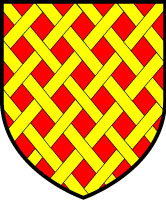
| Arms* | Fretty (Birch).11 | |
| Event-Misc | 30 October 1250 | He was Keeper of the Castle of Newcastle-under-Lyme9 |
| Event-Misc | between 1261 and 1271 | He was Sheriff of Shropshire and Staffordshire9 |
| (Edward) Battle-Evesham | 4 August 1265 | Evesham, Principal=Edward I "Longshanks" Plantagenet King of England, Principal=Simon VI de Montfort4,12,13 |
| Occupation* | between 1270 and 1271 | Justiciar of Ireland |
| Event-Misc* | 10 July 1270 | Protection 4 years going on crusade to the Holy Land with K. and P. Edw. (P. R.), Witness=Edward I "Longshanks" Plantagenet King of England, Witness=Henry III Plantagenet King of England11 |
Family 1 | Alice de Mohun b. c 1230, d. bt 1282 - 1284 | |
| Child | ||
Family 2 | Ela Longespée b. 1228, d. b 22 Nov 1299 | |
| Children |
| |
| Last Edited | 24 Sep 2005 |
Citations
- [S168] Frederick Lewis Weis, Ancestral Roots, 207-31.
- [S218] Marlyn Lewis, Ancestry of Elizabeth of York.
- [S301] Carl Boyer 3rd, Medieval English Ancestors of Robert Abell, p. 8.
- [S342] Sir Bernard Burke, Extinct Peerages, p. 15.
- [S284] Douglas Richardson, Plantagenet Ancestry, Audley 5.
- [S233] Frederick Lewis Weis, Magna Charta Sureties, 143-3.
- [S284] Douglas Richardson, Plantagenet Ancestry, Stafford 7.
- [S325] Rev. C. Moor, Knights of Edward I, p. 26.
- [S347] Carl Boyer 3rd, Medieval English Ancestors of Certain Americans, p. 10.
- [S376] Unknown editor, unknown short title.
- [S325] Rev. C. Moor, Knights of Edward I, p. 25.
- [S342] Sir Bernard Burke, Extinct Peerages, p. 27.
- [S301] Carl Boyer 3rd, Medieval English Ancestors of Robert Abell, p. 31.
- [S233] Frederick Lewis Weis, Magna Charta Sureties, 143-4.
Ela Longespée1
F, #2982, b. 1228, d. before 22 November 1299
| Father* | Sir William de Longespée2,3 b. c 1208, d. 7 Feb 1249/50 | |
| Mother* | Idoine de Camville2,4,5,6 b. b 1205, d. between 01 Jan 1250/1-21 Sep | |
Ela Longespée|b. 1228\nd. b 22 Nov 1299|p100.htm#i2982|Sir William de Longespée|b. c 1208\nd. 7 Feb 1249/50|p228.htm#i6831|Idoine de Camville|b. b 1205\nd. between 01 Jan 1250/1-21 Sep|p231.htm#i6914|Sir William Longespée|b. 1176\nd. 7 Mar 1225/26|p135.htm#i4028|Ela d' Evereux|b. 1187\nd. 24 Aug 1261|p135.htm#i4029|Richard d. Camville|d. b 1226|p234.htm#i6995|Eustacia Basset|d. 1215|p234.htm#i6996| | ||
| Charts | Ann Marbury Pedigree |
| Birth* | 1228 | 2,7 |
| Marriage* | 1244 | Principal=Sir James de Audley1,2,3,8,9,10 |
| Death* | before 22 November 1299 | 2 |
Family | Sir James de Audley b. c 1220, d. c 11 Jun 1272 | |
| Children |
| |
| Last Edited | 12 Jun 2005 |
Citations
- [S168] Frederick Lewis Weis, Ancestral Roots, 207-31.
- [S218] Marlyn Lewis, Ancestry of Elizabeth of York.
- [S233] Frederick Lewis Weis, Magna Charta Sureties, 143-3.
- [S168] Frederick Lewis Weis, Ancestral Roots, 122-29.
- [S233] Frederick Lewis Weis, Magna Charta Sureties, 143-2.
- [S284] Douglas Richardson, Plantagenet Ancestry, Longespée 4.
- [S347] Carl Boyer 3rd, Medieval English Ancestors of Certain Americans, p. 131.
- [S284] Douglas Richardson, Plantagenet Ancestry, Stafford 7.
- [S284] Douglas Richardson, Plantagenet Ancestry, Audley 5.
- [S301] Carl Boyer 3rd, Medieval English Ancestors of Robert Abell, p. 8.
- [S325] Rev. C. Moor, Knights of Edward I, p. 26.
- [S233] Frederick Lewis Weis, Magna Charta Sureties, 143-4.
Alice de Audley1
F, #2983, b. circa 1300, d. 12 January 1375
| Father* | Sir Hugh de Audley1,3,2 b. c 1267, d. bt Nov 1325 - Mar 1326 | |
| Mother* | Isolde de Mortimer1,2,3 b. bt 1255 - 1260, d. b 4 Aug 1338 | |
Alice de Audley|b. c 1300\nd. 12 Jan 1375|p100.htm#i2983|Sir Hugh de Audley|b. c 1267\nd. bt Nov 1325 - Mar 1326|p92.htm#i2732|Isolde de Mortimer|b. bt 1255 - 1260\nd. b 4 Aug 1338|p92.htm#i2733|Sir James de Audley|b. c 1220\nd. c 11 Jun 1272|p100.htm#i2981|Ela Longespée|b. 1228\nd. b 22 Nov 1299|p100.htm#i2982|Sir Roger de Mortimer|b. 1231\nd. 27 Oct 1282|p100.htm#i2997|Maud de Braiose|b. c 1226\nd. b 23 Mar 1300/1|p100.htm#i2998| | ||
| Birth* | circa 1300 | 3,4 |
| Marriage* | after 25 November 1317 | Groom=Sir Ralph de Greystoke3,5,4 |
| Marriage* | circa 14 January 1326/27 | Groom=Sir Ralph de Neville1,3,5,4 |
| Death | 12 January 1373/74 | Greystoke, Northumberland, England4 |
| Death* | 12 January 1375 | Greystoke, Northumberland, England1,3 |
| Burial* | Durham Cathedral, Durham, England3,5,4 |
Family 1 | Sir Ralph de Greystoke b. 15 Aug 1299, d. 14 Jul 1323 | |
| Children |
| |
Family 2 | Sir Ralph de Neville b. c 1291, d. 5 Aug 1367 | |
| Children |
| |
| Last Edited | 26 Jan 2005 |
Citations
Sir Ralph de Neville1
M, #2984, b. circa 1291, d. 5 August 1367
| Father* | Randolph de Neville2 b. 18 Oct 1262, d. 18 Apr 1331 | |
| Mother* | Euphemia de Clavering2 b. a 1265, d. c 1320 | |
Sir Ralph de Neville|b. c 1291\nd. 5 Aug 1367|p100.htm#i2984|Randolph de Neville|b. 18 Oct 1262\nd. 18 Apr 1331|p231.htm#i6928|Euphemia de Clavering|b. a 1265\nd. c 1320|p231.htm#i6929|Robert d. Neville|b. c 1236\nd. 6 Jun 1271|p234.htm#i7009|Mary FitzRalph|b. c 1246\nd. 1320|p234.htm#i7010|Robert FitzRoger|b. 1247\nd. 1310, before 20 Apr|p231.htm#i6930|Margery la Zouche|b. c 1251|p229.htm#i6865| | ||
| Birth* | circa 1291 | 1,3 |
| Birth | circa 1302 | Raby, Durham, England2 |
| Marriage* | circa 14 January 1326/27 | 2nd=Alice de Audley1,2,3,4 |
| Death* | 5 August 1367 | 1,2,3 |
| Burial* | Durham Cathedral, England2,3 |
Family | Alice de Audley b. c 1300, d. 12 Jan 1375 | |
| Children |
| |
| Last Edited | 20 Nov 2004 |
Sir Richard FitzAlan1
M, #2985, b. 3 February 1266/67, d. 9 March 1301/2
 |
| Father* | Sir John FitzAlan2,3,4,5 b. 14 Sep 1246, d. 18 Mar 1271/72 | |
| Mother* | Isabel de Mortimer2,3,4,5 b. c 1248, d. a 1300 | |
Sir Richard FitzAlan|b. 3 Feb 1266/67\nd. 9 Mar 1301/2|p100.htm#i2985|Sir John FitzAlan|b. 14 Sep 1246\nd. 18 Mar 1271/72|p100.htm#i2995|Isabel de Mortimer|b. c 1248\nd. a 1300|p100.htm#i2996|Sir John FitzAlan|b. May 1223\nd. b 10 Nov 1267|p101.htm#i3009|Maud le Boteler|b. c 1225\nd. 27 Nov 1283|p101.htm#i3010|Sir Roger de Mortimer|b. 1231\nd. 27 Oct 1282|p100.htm#i2997|Maud de Braiose|b. c 1226\nd. b 23 Mar 1300/1|p100.htm#i2998| | ||
| Charts | Ann Marbury Pedigree |
| Birth* | 3 February 1266/67 | Arundel, Essex, England1,3,6 |
| Marriage* | circa November 1281 | Principal=Alasia de Saluzzo6 |
| Marriage | circa 1284 | Conflict=Alasia de Saluzzo3,7 |
| Marriage | before 1285 | Conflict=Alasia de Saluzzo1,8,9 |
| Burial* | Wymondham Priory (Haughmond Abbey?), Norfolk, England3 | |
| Death* | 9 March 1301/2 | 1,3,7 |
| DNB* | Fitzalan, Richard (I), first earl of Arundel (1267-1302), magnate and soldier, was the son of John (III) Fitzalan (d. 1272/3), lord of Arundel, and his wife, Isabel, daughter of Roger (III) de Mortimer of Wigmore, and was therefore the grandson of John (II) Fitzalan. He was born in 1267, probably on 3 February. His father died when he was five years old, and his estates were wasted by his grandmother Maud, and her second husband, Richard d'Amundeville. He was himself, however, under the wardship of his grandfather Mortimer, although several custodians, among whom was his mother (1280), successively held his castle at Arundel. Before 1285 Fitzalan married Alasia or Alice, the daughter of Thomas, marquess of Saluzzo, an alliance which is thought to point to a lengthened sojourn in Italy. In 1287 Fitzalan received his first writ of summons against the rebel Rhys ap Maredudd, and was enjoined to reside on his Shropshire estates until the revolt was put down. He is there described as Richard Fitzalan, but in January 1292 he is styled earl of Arundel for the first time, and it was as earl of Arundel that he was regularly styled thereafter. In 1292 his zeal to join the king's forces was the excuse for a humiliating submission to Gilbert de St Leofard, bishop of Chichester, after a quarrel about his right of hunting in Houghton Forest. In 1294 he was appointed to command the forces sent to relieve Bere Castle, in Meirionydd, which was threatened by the Welsh insurgent Madog. In 1295 he was active in leading the baronial opposition to Edward I's demands for paid military service in Gascony. However, in 1297 having laid aside his opposition, he agreed to serve in the duchy. In 1298, 1299, and 1300 he held command in Scotland, and in the latter year appeared, a ‘beau chevalier et bien amé’ and ‘richement armé’, at the siege of Caerlaverock (Nicolas, 50). His last attendance in parliament was in 1301 at Lincoln, where he was one of the signatories of the famous letter to the pope backing Edward I's claim to Scotland. His last military summons was to Carlisle for 24 June 1301. He died on 9 March 1302 and was buried in Haughmond Abbey, Shropshire. With his wife Fitzalan had two sons, of whom the elder, Edmund Fitzalan, succeeded him, while the younger, John, was still alive in 1375. Of their two daughters, one, Maud, married Philip, Lord Burnell, and the other, Margaret, married William Botiler of Wem. T. F. Tout, rev. Nigel Saul Sources F. Palgrave, ed., The parliamentary writs and writs of military summons, 1 (1827), 599–60 · C. Roberts, ed., Calendarium genealogicum: Henry III and Edward I, 2, PRO (1985), 622 · Chancery records · W. Dugdale, The baronage of England, 2 vols. (1675–6) · R. W. Eyton, Antiquities of Shropshire, 12 vols. (1854–60), vol. 4, pp. 122–3; vol. 7, pp. 260–61 · M. A. Tierney, The history and antiquities of the castle and town of Arundel, 1 (1834), 201–12 · Reports … touching the dignity of a peer of the realm, House of Lords, 1 (1820), 420, 421 · C. Muletti, ed., Memorie storico-diplomatiche appartementi alla città ed ai marchesi di Saluzzo (1829), 2.508 · [Walter of Exeter?], The siege of Carlaverock … with a translation, a history of the castle and memoirs of the personages commemorated by the poet, ed. and trans. N. H. Nicolas (1828), 50 · GEC, Peerage © Oxford University Press 2004–5 All rights reserved: see legal notice Oxford University Press T. F. Tout, ‘Fitzalan, Richard (I), first earl of Arundel (1267-1302)’, rev. Nigel Saul, Oxford Dictionary of National Biography, Oxford University Press, 2004 [http://www.oxforddnb.com/view/article/9533, accessed 24 Sept 2005] Richard (I) Fitzalan (1267-1302): doi:10.1093/ref:odnb/953310 | |
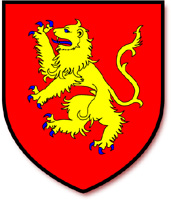
| Arms* | De gules ou ung leon d'or (Falkirk). De goules a un lion rampaunt de or (Parl.). Gu. A lion rampnat or (St. George, Charles, Segar, Stepney, 1,2,3 Nob.). Sealed, 1301: A lion rampant (Birch). "Richard, the Earl of Arundel, a handsome and well-beloved knight, I saw there, richly armed in Red with a gold lion rampant." (Carlaverock).11 | |
| Event-Misc* | 5 June 1283 | He owes 2000 m. to Bp. of Bath and Wells for marriage of the Bp's nephew Phillip Burnel, which he bought for use of his sis. Matilda.11 |
| Event-Misc | 24 June 1287 | He is not to communicate with Rhys ap Mereduc or his accomplices, but to provide 400 foot and defend his demesnes against him and remain in Wales until Rhys be put down.11 |
| Event-Misc | 8 December 1287 | He had seizin of his lands7 |
| Title* | 1289 | He was created Earl of Arundel9 |
| Event-Misc | 6 January 1292 | He gives to Bp. of Bath and Wells his manors of Kyvele, Wilts.; Milham, Norf.; Chipping Norton, Oxon; and Trokford, Ches., for 12 years for £1810 3s. 10d.11 |
| Event-Misc | 27 October 1293 | He is made captain of forces fighting the Welsh.9 |
| Summoned | 24 June 1295 | Parliament by writ directed Ricardo filio Alani Comiti Arundell6 |
| Summoned* | between 1 August 1295 and 1301 | parliament9 |
| Summoned | 7 July 1297 | serve overseas9 |
| Summoned | 9 September 1297 | meet Prince Edward with horses and arms9 |
| Summoned | Whitsunday 1298 | meet K. for a conference at York9 |
| (English) Battle-Falkirk | 22 July 1298 | Principal=Edward I "Longshanks" Plantagenet King of England12,13,14 |
| Summoned | 6 June 1299 | serve against the Scots9 |
| Event-Misc | 1301 | He seals letter to the Pope as Earl of Arundel9 |
| Event-Misc* | 10 August 1301 | Richard FitzAlan and Fulk FitzWarin are forbidden to attack one another, Principal=Sir Fulk IV FitzWarin9 |
| Feudal* | 15 January 1302 | (at his inquest) Arundel Castle, Corough, Honor, and Manors as 1/4 earldom, Manors of Estdene, Churletone, Sengeltone, Westdene, N. Stoke, and Burne, mess. and lands at Dunhurst, Palyngham, and Stansted, Suss., Oswestry, Clone, and Schyrewordyn Castle, mess. at Acton Rounde, and many lands in Salop, Kyvele Manor and several Kt. Fees in Wilts., mess. and lands at Fleckenho in Warw., land at Milham and Beston in Norf., and Chipping Norton Manor in Oxon.9 |
| Event-Misc | 2 February 1302 | He left a debt of £1000 to the K., who orders Escheator to take the better and more beautiful horses of Richard's stud9 |
| Event-Misc | 18 July 1302 | Granted to Amadeus, Count of Savoy, custody of his lands, except Arundel Castle and Park, and Estdene Park, for 3 years at £600 p.a., in minority of his s. h. Edmund9 |
| Event-Misc* | 22 October 1305 | Fulk le Strange is Custos of the lands of Richard FitzAlan in Salop and Wales, Principal=Sir Fulk le Strange of Blackmere9 |
Family | Alasia de Saluzzo b. c 1271, d. 25 Sep 1292 | |
| Children |
| |
| Last Edited | 24 Sep 2005 |
Citations
- [S168] Frederick Lewis Weis, Ancestral Roots, 28-31.
- [S168] Frederick Lewis Weis, Ancestral Roots, 28-30.
- [S218] Marlyn Lewis, Ancestry of Elizabeth of York.
- [S233] Frederick Lewis Weis, Magna Charta Sureties, 134-4.
- [S284] Douglas Richardson, Plantagenet Ancestry, Fitz Alan 7.
- [S284] Douglas Richardson, Plantagenet Ancestry, Fitz Alan 8.
- [S301] Carl Boyer 3rd, Medieval English Ancestors of Robert Abell, p. 110.
- [S233] Frederick Lewis Weis, Magna Charta Sureties, 134-5.
- [S325] Rev. C. Moor, Knights of Edward I, v. 2, p. 31.
- [S376] Unknown editor, unknown short title.
- [S325] Rev. C. Moor, Knights of Edward I, v. 2, p. 30.
- [S284] Douglas Richardson, Plantagenet Ancestry, Plantagenet 5.
- [S301] Carl Boyer 3rd, Medieval English Ancestors of Robert Abell, p. 125.
- [S347] Carl Boyer 3rd, Medieval English Ancestors of Certain Americans, p. 35.
- [S233] Frederick Lewis Weis, Magna Charta Sureties, 135-6.
- [S233] Frederick Lewis Weis, Magna Charta Sureties, 134-6.
Alasia de Saluzzo1
F, #2986, b. circa 1271, d. 25 September 1292
| Father* | Tommaso I del Vasto Marquis di Saluzzo1,2,3 b. c 1244, d. 3 Dec 1296 | |
| Mother* | Luise di Ceva1,2 b. c 1245, d. 22 Aug 1291 | |
Alasia de Saluzzo|b. c 1271\nd. 25 Sep 1292|p100.htm#i2986|Tommaso I del Vasto Marquis di Saluzzo|b. c 1244\nd. 3 Dec 1296|p100.htm#i2987|Luise di Ceva|b. c 1245\nd. 22 Aug 1291|p100.htm#i2988|Manfredo I. del Vasto Marquis of Saluzzo|b. c 1204\nd. 29 Oct 1244|p100.htm#i2990|Beatrice of Savoy|b. c 1224\nd. 1259|p100.htm#i2991|Giorgio di Ceva|d. 1268|p100.htm#i2989|Elisa d. Este Ceva/||p111.htm#i3311| | ||
| Charts | Ann Marbury Pedigree |
| Birth* | circa 1271 | Arundel, Sussex, England2 |
| Marriage | circa November 1281 | Principal=Sir Richard FitzAlan4 |
| Marriage | circa 1284 | Conflict=Sir Richard FitzAlan2,5 |
| Marriage* | before 1285 | Conflict=Sir Richard FitzAlan1,3,6 |
| Death* | 25 September 1292 | 1,2,3,4 |
| Burial* | Todingham Priory, England2 | |
| Name Variation | Alisone de Saluzzo2 |
Family | Sir Richard FitzAlan b. 3 Feb 1266/67, d. 9 Mar 1301/2 | |
| Children |
| |
| Last Edited | 7 Nov 2004 |
Citations
- [S168] Frederick Lewis Weis, Ancestral Roots, 28-31.
- [S218] Marlyn Lewis, Ancestry of Elizabeth of York.
- [S233] Frederick Lewis Weis, Magna Charta Sureties, 134-5.
- [S284] Douglas Richardson, Plantagenet Ancestry, Fitz Alan 8.
- [S301] Carl Boyer 3rd, Medieval English Ancestors of Robert Abell, p. 110.
- [S325] Rev. C. Moor, Knights of Edward I, v. 2, p. 31.
- [S233] Frederick Lewis Weis, Magna Charta Sureties, 134-6.
Tommaso I del Vasto Marquis di Saluzzo1,2
M, #2987, b. circa 1244, d. 3 December 1296
| Father* | Manfredo III del Vasto Marquis of Saluzzo3,1 b. c 1204, d. 29 Oct 1244 | |
| Mother* | Beatrice of Savoy3,1,2 b. c 1224, d. 1259 | |
Tommaso I del Vasto Marquis di Saluzzo|b. c 1244\nd. 3 Dec 1296|p100.htm#i2987|Manfredo III del Vasto Marquis of Saluzzo|b. c 1204\nd. 29 Oct 1244|p100.htm#i2990|Beatrice of Savoy|b. c 1224\nd. 1259|p100.htm#i2991|Bonifacio del Vasto Marquis di Saluzzo|b. c 1182\nd. 1212|p142.htm#i4252|Maria o. T. (?)|d. a 1215|p142.htm#i4253|Count Amadeo I. of Savoy|b. 1197\nd. 24 Jun 1253|p100.htm#i2992|Anne (?)|b. c 1192\nd. 1242|p272.htm#i8159| | ||
| Charts | Ann Marbury Pedigree |
| Birth* | circa 1244 | of Saluzzo, Piedmont, Italy1 |
| Marriage* | 1258 | Principal=Luise di Ceva3,1,2 |
| Death* | 3 December 1296 | 1,2 |
| Name Variation | Thomas I of Saluzzo3 | |
| Residence* | Piedmont, Italy3 |
Family | Luise di Ceva b. c 1245, d. 22 Aug 1291 | |
| Children |
| |
| Last Edited | 16 Jul 2004 |
Luise di Ceva1
F, #2988, b. circa 1245, d. 22 August 1291
| Father* | Giorgio di Ceva2,1 d. 1268 | |
| Mother* | Elisa de Este Ceva/1 | |
Luise di Ceva|b. c 1245\nd. 22 Aug 1291|p100.htm#i2988|Giorgio di Ceva|d. 1268|p100.htm#i2989|Elisa de Este Ceva/||p111.htm#i3311|Guglielmo I. del Vasto Marquis de Ceva|b. c 1180\nd. 1219|p142.htm#i4255|di Saluzzo|b. c 1185|p142.htm#i4256|Albert d. Este||p327.htm#i9809|||| | ||
| Charts | Ann Marbury Pedigree |
| Birth* | circa 1245 | of Saluzzo, Piedmont, Italy1 |
| Marriage* | 1258 | Principal=Tommaso I del Vasto Marquis di Saluzzo2,1,3 |
| Death* | 22 August 1291 | 1,3 |
| Name Variation | Luisa de Cave2 | |
| Name Variation | Aluigia del Vasto3 |
Family | Tommaso I del Vasto Marquis di Saluzzo b. c 1244, d. 3 Dec 1296 | |
| Children |
| |
| Last Edited | 16 Jul 2004 |
Giorgio di Ceva1
M, #2989, d. 1268
| Father* | Guglielmo II del Vasto Marquis de Ceva1 b. c 1180, d. 1219 | |
| Mother* | di Saluzzo1 b. c 1185 | |
Giorgio di Ceva|d. 1268|p100.htm#i2989|Guglielmo II del Vasto Marquis de Ceva|b. c 1180\nd. 1219|p142.htm#i4255|di Saluzzo|b. c 1185|p142.htm#i4256|Guglielmo I. (?)|b. c 1145\nd. 1197|p143.htm#i4263|(Miss) di Vento||p143.htm#i4264|Manfredo I. del Vasto Marquis di Saluzzo|d. 22 Jun 1215|p142.htm#i4257|Alice d. Montferrat|b. c 1160|p142.htm#i4258| | ||
| Marriage* | Principal=Elisa de Este Ceva/1 | |
| Death* | 1268 | 1 |
| Name Variation | Marquis George of Cave2 |
Family | Elisa de Este Ceva/ | |
| Child |
| |
| Last Edited | 24 Oct 2003 |
Manfredo III del Vasto Marquis of Saluzzo1,2
M, #2990, b. circa 1204, d. 29 October 1244
| Father* | Bonifacio del Vasto Marquis di Saluzzo3,2 b. c 1182, d. 1212 | |
| Mother* | Maria of Torres (?)3 d. a 1215 | |
Manfredo III del Vasto Marquis of Saluzzo|b. c 1204\nd. 29 Oct 1244|p100.htm#i2990|Bonifacio del Vasto Marquis di Saluzzo|b. c 1182\nd. 1212|p142.htm#i4252|Maria of Torres (?)|d. a 1215|p142.htm#i4253|Manfredo I. del Vasto Marquis di Saluzzo|d. 22 Jun 1215|p142.htm#i4257|Alice d. Montferrat|b. c 1160|p142.htm#i4258|Comita I. of Torres|d. 1216|p142.htm#i4259|Spella d. Arborea||p142.htm#i4260| | ||
| Birth* | circa 1204 | 2 |
| Marriage* | March 1233 | Principal=Beatrice of Savoy1,3,2 |
| Death* | 29 October 1244 | 3,2 |
Family | Beatrice of Savoy b. c 1224, d. 1259 | |
| Children |
| |
| Last Edited | 16 Jul 2004 |
Beatrice of Savoy1
F, #2991, b. circa 1224, d. 1259
| Father* | Count Amadeo IV of Savoy1,2 b. 1197, d. 24 Jun 1253 | |
| Mother* | Anne (?)2 b. c 1192, d. 1242 | |
Beatrice of Savoy|b. c 1224\nd. 1259|p100.htm#i2991|Count Amadeo IV of Savoy|b. 1197\nd. 24 Jun 1253|p100.htm#i2992|Anne (?)|b. c 1192\nd. 1242|p272.htm#i8159|Count Thomas I. of Savoy|b. 20 May 1178\nd. 1233|p100.htm#i2993|Margaret of Geneva|b. c 1179\nd. 8 Apr 1257|p100.htm#i2994|Hugh I. (?)|b. c 1148\nd. 25 Aug 1192|p267.htm#i8010|Béatrix d' Albon|b. c 1162\nd. 15 Dec 1228|p143.htm#i4262| | ||
| Birth* | circa 1224 | Savoy, France2 |
| Marriage* | March 1233 | Principal=Manfredo III del Vasto Marquis of Saluzzo1,2,3 |
| Marriage* | between 1248 and 1249 | Principal=Manfred of Hohenstaufen2 |
| Death* | 1259 | 1 |
| Death | before 10 May 1259 | Spain2,3 |
Family 1 | Manfredo III del Vasto Marquis of Saluzzo b. c 1204, d. 29 Oct 1244 | |
| Children |
| |
Family 2 | Manfred of Hohenstaufen b. 1232, d. 26 Feb 1266 | |
| Children |
| |
| Last Edited | 16 Jul 2004 |
Count Amadeo IV of Savoy1
M, #2992, b. 1197, d. 24 June 1253
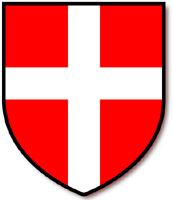 |
| Father* | Count Thomas I of Savoy1,2 b. 20 May 1178, d. 1233 | |
| Mother* | Margaret of Geneva1,2 b. c 1179, d. 8 Apr 1257 | |
Count Amadeo IV of Savoy|b. 1197\nd. 24 Jun 1253|p100.htm#i2992|Count Thomas I of Savoy|b. 20 May 1178\nd. 1233|p100.htm#i2993|Margaret of Geneva|b. c 1179\nd. 8 Apr 1257|p100.htm#i2994|Count Humbert I. of Savoy|b. 1 Aug 1136\nd. 4 Mar 1188/89|p117.htm#i3503|Beatrix o. V. (?)|b. c 1160\nd. 8 Apr 1230|p117.htm#i3504|Count William I. of Geneva|b. 1130\nd. 25 Jul 1195|p117.htm#i3505|Beatrice o. F. (?)|d. a 1180|p117.htm#i3506| | ||
| Birth* | 1197 | of Savoy, France2 |
| Marriage* | 1222 | Principal=Anne (?)2 |
| Marriage* | circa 18 December 1244 | Orange, Principal=Cecile des Baux2 |
| Death* | 24 June 1253 | 2 |
| Name Variation | Amadeus IV (?)2 |
Family 1 | Anne (?) b. c 1192, d. 1242 | |
| Children |
| |
Family 2 | Cecile des Baux d. 21 May 1275 | |
| Children |
| |
| Last Edited | 9 Jan 2005 |
Count Thomas I of Savoy1
M, #2993, b. 20 May 1178, d. 1233
|
| Father* | Count Humbert III of Savoy2,3 b. 1 Aug 1136, d. 4 Mar 1188/89 | |
| Mother* | Beatrix of Vienne (?)2,4 b. c 1160, d. 8 Apr 1230 | |
Count Thomas I of Savoy|b. 20 May 1178\nd. 1233|p100.htm#i2993|Count Humbert III of Savoy|b. 1 Aug 1136\nd. 4 Mar 1188/89|p117.htm#i3503|Beatrix of Vienne (?)|b. c 1160\nd. 8 Apr 1230|p117.htm#i3504|Amadeus I. of Savoy|b. 1088\nd. 30 Aug 1148|p120.htm#i3574|Mahaud d' Albon|d. a 1 Jan 1145|p120.htm#i3575|Girard (?)|b. c 1142\nd. 14 Sep 1184|p120.htm#i3579|Maurette d. S. (?)|b. c 1140\nd. a 1200|p120.htm#i3580| | ||
| Birth* | 20 May 1178 | Chambonnieres, Savoy, Italy2,4 |
| Marriage* | May 1195 | Principal=Margaret of Geneva1,2 |
| Death* | 1233 | 1 |
| Death | 1 March 1233 | Aosta, Savoy, France2,3 |
| Burial* | St. Michael de la Cluse, Aosta, Savoy, France2 |
Family | Margaret of Geneva b. c 1179, d. 8 Apr 1257 | |
| Children |
| |
| Last Edited | 23 Jan 2005 |
Citations
- [S168] Frederick Lewis Weis, Ancestral Roots, 28-31.
- [S218] Marlyn Lewis, Ancestry of Elizabeth of York.
- [S168] Frederick Lewis Weis, Ancestral Roots, 133-26.
- [S338] Frederick Lewis Weis, Ancestral Roots, 8th ed., 274C-26.
- [S234] David Faris, Plantagenet Ancestry, Plantagenet 13.
- [S338] Frederick Lewis Weis, Ancestral Roots, 8th ed., 274E-28.
Margaret of Geneva1
F, #2994, b. circa 1179, d. 8 April 1257
| Father* | Count William I of Geneva2,3 b. 1130, d. 25 Jul 1195 | |
| Mother* | Beatrice of Faucigny (?)2,3 d. a 1180 | |
Margaret of Geneva|b. c 1179\nd. 8 Apr 1257|p100.htm#i2994|Count William I of Geneva|b. 1130\nd. 25 Jul 1195|p117.htm#i3505|Beatrice of Faucigny (?)|d. a 1180|p117.htm#i3506|Count Amadeo I. of Geneva|b. 1100\nd. 26 Jun 1170|p120.htm#i3589|Matilda d. Cuiseaux|d. b 2 Jul 1137|p120.htm#i3590|Aimon I. of Faucigny|d. bt 1150 - 1178|p120.htm#i3598|Clementia o. B. (?)||p120.htm#i3599| | ||
| Birth* | circa 1179 | 2 |
| Marriage* | May 1195 | Principal=Count Thomas I of Savoy1,2 |
| Death* | 8 April 1257 | Pierre Chatel, France2,4 |
Family | Count Thomas I of Savoy b. 20 May 1178, d. 1233 | |
| Children |
| |
| Last Edited | 24 Oct 2003 |
Sir John FitzAlan1
M, #2995, b. 14 September 1246, d. 18 March 1271/72
|
| Father* | Sir John FitzAlan2,3,4 b. May 1223, d. b 10 Nov 1267 | |
| Mother* | Maud le Boteler2,5,3 b. c 1225, d. 27 Nov 1283 | |
Sir John FitzAlan|b. 14 Sep 1246\nd. 18 Mar 1271/72|p100.htm#i2995|Sir John FitzAlan|b. May 1223\nd. b 10 Nov 1267|p101.htm#i3009|Maud le Boteler|b. c 1225\nd. 27 Nov 1283|p101.htm#i3010|John FitzAlan|b. c 1164\nd. Mar 1240|p101.htm#i3013|Isabel d' Aubigny|b. c 1203|p101.htm#i3012|Theobald Butler|b. 1200\nd. 19 Jul 1230|p89.htm#i2665|Rohese de Verdun|b. c 1200\nd. b 22 Feb 1246|p89.htm#i2664| | ||
| Charts | Ann Marbury Pedigree |
| Birth* | 14 September 1246 | Arundel, Essex, England1,3,6,7 |
| Marriage* | before 14 May 1260 | Her maritagium included 40 librates of land in Doddington, Shropshire, 1st=Isabel de Mortimer1,3,6,7 |
| Death* | 18 March 1271/72 | 1,3,6,7,4 |
| Burial* | Haughmond Abbey, Shropshire, England3,7 | |
| Title | Earl of Arundel, Lord of Clun8,4 | |
| Arms* | Gu. A lion rampant or (Dering).8 | |
| Event-Misc | 1263 | He was one of the defenders of Rochester Castle against the rebellious barons.7 |
| (Henry) Battle-Lewes | 14 May 1264 | The Battle of Lewes, Lewes, Sussex, England, when King Henry and Prince Edward were captured by Simon of Montfort, Earl of Leicester. Simon ruled England in Henry's name until his defeat at Evesham, Principal=Henry III Plantagenet King of England, Principal=Simon VI de Montfort9,10,7,11,12,13 |
| Event-Misc* | 2 April 1269 | He is to cede N. Liddebiry Manor, of Bishopric of Hereford, which he occupied during the disturbances, and has since retained.8 |
| Event-Misc | 1 January 1271 | He is granted a pardon on 100 m. fine of all his debts to Hagin fil. Master Mosseus, a Jew of London8 |
| Title* | Lord of Clun1 | |
| Feudal* | 25 March 1272 | Arundel Castle and borough, and 25 Kt. Fees in Suss., with Oswestry and Clune Castles, Salop.8 |
| Event-Misc | 8 April 1272 | Robert Aguillon made Custos of Arundel Castle.8 |
| Event-Misc | 5 August 1272 | K. having lately granted to Roger de Mortimer £100 p.a. from lands and castles of Jn. Fitz Alan in minority of his heir, now assigns to said Roger Clune Castle and Manor, val. £82 9s. 5 and 1/4 d.8 |
Family | Isabel de Mortimer b. c 1248, d. a 1300 | |
| Children |
| |
| Last Edited | 3 Apr 2005 |
Citations
- [S168] Frederick Lewis Weis, Ancestral Roots, 28-30.
- [S168] Frederick Lewis Weis, Ancestral Roots, 149-28.
- [S218] Marlyn Lewis, Ancestry of Elizabeth of York.
- [S301] Carl Boyer 3rd, Medieval English Ancestors of Robert Abell, p. 110.
- [S233] Frederick Lewis Weis, Magna Charta Sureties, 134-3.
- [S233] Frederick Lewis Weis, Magna Charta Sureties, 134-4.
- [S284] Douglas Richardson, Plantagenet Ancestry, Fitz Alan 7.
- [S325] Rev. C. Moor, Knights of Edward I, v. 2, p. 30.
- [S284] Douglas Richardson, Plantagenet Ancestry, Plantagenet 4.
- [S325] Rev. C. Moor, Knights of Edward I, v. 5, p. 10.
- [S342] Sir Bernard Burke, Extinct Peerages, p. 21.
- [S301] Carl Boyer 3rd, Medieval English Ancestors of Robert Abell, p. 218.
- [S347] Carl Boyer 3rd, Medieval English Ancestors of Certain Americans, p. 34.
Isabel de Mortimer1
F, #2996, b. circa 1248, d. after 1300
| Father* | Sir Roger de Mortimer2,3,4,5 b. 1231, d. 27 Oct 1282 | |
| Mother* | Maud de Braiose2,3,4,5 b. c 1226, d. b 23 Mar 1300/1 | |
Isabel de Mortimer|b. c 1248\nd. a 1300|p100.htm#i2996|Sir Roger de Mortimer|b. 1231\nd. 27 Oct 1282|p100.htm#i2997|Maud de Braiose|b. c 1226\nd. b 23 Mar 1300/1|p100.htm#i2998|Sir Ralph de Mortimer|b. c 1190\nd. 6 Aug 1246|p101.htm#i3022|Gladys D. ferch Llywelyn ab Iorwerth|b. c 1194\nd. 1251|p101.htm#i3021|William de Braiose|b. c 1204\nd. 2 May 1230|p92.htm#i2744|Eve Marshal|b. c 1206\nd. b 1246|p92.htm#i2745| | ||
| Charts | Ann Marbury Pedigree |
| Birth* | circa 1248 | Wigmore, Herefordshire, England3 |
| Marriage* | before 14 May 1260 | Her maritagium included 40 librates of land in Doddington, Shropshire, Groom=Sir John FitzAlan6,3,4,7 |
| Marriage* | before 1273 | Groom=Ralph de Arderne7 |
| Marriage | before 4 April 1283 | Conflict=Ralph de Arderne8 |
| Marriage* | 2 September 1285 | Poling, Sussex, England, sine lic., Groom=Robert de Hasteng7,9 |
| Marriage | before 6 June 1287 | This marriage was private at a fine of £1000, Conflict=Robert de Hasteng8,10 |
| Death | before 1 April 1292 | 8 |
| Death* | after 1300 | 3,4,7 |
| Name Variation | Isabella Mortimer6 | |
| Event-Misc* | 11 March 1268 | She has care of the children of John, E. of Surrey, and K. commits to her Farnham Castle8 |
| Event-Misc | 3 October 1272 | She has one third of Arundel Forest, but not the bucks and does, as part of her dower.8 |
Family | Sir John FitzAlan b. 14 Sep 1246, d. 18 Mar 1271/72 | |
| Children |
| |
| Last Edited | 29 May 2005 |
Citations
- [S284] Douglas Richardson, Plantagenet Ancestry, Fitz Alan 8.
- [S168] Frederick Lewis Weis, Ancestral Roots, 28-29.
- [S218] Marlyn Lewis, Ancestry of Elizabeth of York.
- [S233] Frederick Lewis Weis, Magna Charta Sureties, 134-4.
- [S284] Douglas Richardson, Plantagenet Ancestry, Mortimer 6.
- [S168] Frederick Lewis Weis, Ancestral Roots, 28-30.
- [S284] Douglas Richardson, Plantagenet Ancestry, Fitz Alan 7.
- [S325] Rev. C. Moor, Knights of Edward I, v. 2, p. 30.
- [S347] Carl Boyer 3rd, Medieval English Ancestors of Certain Americans, p. 86.
- [S301] Carl Boyer 3rd, Medieval English Ancestors of Robert Abell, p. 110.
Sir Roger de Mortimer1
M, #2997, b. 1231, d. 27 October 1282
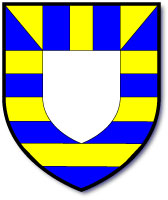 |
| Father* | Sir Ralph de Mortimer2,3 b. c 1190, d. 6 Aug 1246 | |
| Mother* | Gladys Dhu ferch Llywelyn ab Iorwerth2,3 b. c 1194, d. 1251 | |
Sir Roger de Mortimer|b. 1231\nd. 27 Oct 1282|p100.htm#i2997|Sir Ralph de Mortimer|b. c 1190\nd. 6 Aug 1246|p101.htm#i3022|Gladys Dhu ferch Llywelyn ab Iorwerth|b. c 1194\nd. 1251|p101.htm#i3021|Roger de Mortimer|b. c 1158\nd. b 19 Aug 1214|p101.htm#i3024|Isabel de Ferrières|b. c 1166\nd. b 20 Apr 1252|p101.htm#i3025|Llewelyn ap Iorwerth "the Great"|b. 1173\nd. 11 Apr 1240|p99.htm#i2961|Joan of Wales|b. b 1200\nd. 30 Mar 1236|p99.htm#i2962| | ||
| Charts | Ann Marbury Pedigree |
| Birth* | 1231 | Cwmaron Castle, Radnorshire, Wales3,1,4,5 |
| Marriage* | 1247 | Principal=Maud de Braiose1,3,6,4 |
| Death* | 27 October 1282 | Kingsland, Herefordshire, England4 |
| Death | 29 October 1282 | 7 |
| Death | before 30 October 1282 | Kingsland, Herefordshire, England1,3,6,5 |
| Burial* | Wigmore, Herefordshire, England3,4 | |
| DNB* | Mortimer, Roger (III) de, lord of Wigmore (1231-1282), magnate, was the first son of Ralph (II) Mortimer (d. 1246), lord of Wigmore [see under Mortimer, Hugh (II) de] and his wife, Gwladys Ddu (d. 1251), the daughter of Llywelyn ab Iorwerth and widow of Reginald de Briouze. Early history and marriage Roger Mortimer is said to have been born at the family's castle of Cymaron in the Welsh march, and in 1242 he was already in service on the march where he fortified a castle in Maelienydd. At the time of Mortimer's birth his family had already been engaged in a struggle for dominance in the middle march with the native rulers of Maelienydd and Gwrtheyrnion for over a century. The marriage of Ralph Mortimer and Gwladys, probably in June 1230, made the family one of the most influential in the march. Ralph Mortimer died on 6 August 1246, and his estate was in the king's hand until his son made a fine of 2000 marks to compensate the crown for its remaining rights of wardship. On 26 February 1247 Mortimer received livery of his lands. Later the same year, though still a minor, he married Maud (or Matilda) de Briouze (d. 1300/01), eldest daughter and coheir of William (V) de Briouze (d. 1230) and Eva Marshal, daughter of William (I) Marshal, earl of Pembroke. William de Briouze had been executed by Llywelyn ab Iorwerth in 1230 for his illicit relationship with Llywelyn's wife, Joan, and his estate divided among his three daughters. When the last of the sons of William (II) Marshal died without heirs in December 1245, the great Marshal patrimony also passed to Eva de Briouze and her Marshal sisters. His marriage to Maud thus greatly augmented Mortimer's holdings in the march, and he acquired Radnor, portions of Brecon, and a share in the holdings of the earls Marshal which included lands in Ireland. The marriage propelled the Mortimer family into the first rank of the English baronage, and the extinction of the Marshal and Briouze lines drastically altered the political character of the Welsh march. Maud's inheritance proved problematic as well however, and the royal government's sloth and inefficiency in distributing these estates was probably one reason for Mortimer's early support of the baronial reform movement. Mortimer's share of his wife's estate was not finally determined until February 1259, but the settlement continued to be controversial into the next decade. Similarly contentious was Mortimer's loss to the crown earlier in the decade of the Gloucestershire manors of Lechlade and Longborough and their grant to Richard of Cornwall. Mortimer's attempts to recover them continued for several years and likewise helped to direct his political decisions. In the march of Wales and England, 1253–1260 Personal grievances apart, the primary reason for Mortimer's prominent involvement in the reform movement was the steady erosion of his position in Wales under military pressure from Llywelyn ap Gruffudd. After the death of Llywelyn ab Iorwerth in 1240 the Mortimers were able to re-establish their lordship over the Welsh cantrefs of Gwrtheyrnion and Maelienydd which they had held sporadically for a century or more. But after Llywelyn ap Gruffudd gained control of Gwynedd in 1255 that lordship was challenged once again. At the Whitsuntide court of 1253 at Winchester, Mortimer was knighted by Henry III. In August he went with the king to Gascony where he served until the following year. Upon his return he found that Llywelyn was threatening to recover all the lands his grandfather had held at his death. In 1256 Llywelyn deprived Mortimer of Gwrtheyrnion without provoking the slightest response from the king's government. On 18 January 1257 Mortimer received letters of protection while engaged in the king's service in Wales. Later that year the king promised him 200 marks in gold to assist him in resisting the growing power of Llywelyn, but by the following year 100 marks of this sum was still owing. On 11 June 1259 Mortimer was among those commissioned to treat with Llywelyn, and on the 25th he joined in concluding a truce that was to last for a year from 1 August. But on 10 January 1260 Llywelyn took the cantref of Builth from Mortimer who was holding it as Prince Edward's representative, and on 17 July Llywelyn's men took the castle itself and destroyed it. The loss of this strategic castle was a great blow to Mortimer's reputation. He had been in London at the time of the attack, pursuing his claim to Lechlade and Longborough, and although Henry and Edward issued a writ absolving him of any blame, the affair led to an estrangement between Mortimer and Edward who then supported Simon de Montfort. At first a strong supporter of reform Mortimer attended the parliament at Oxford of June 1258 where he was one of the twelve chosen by the barons to serve with the twelve chosen by the king. He served on the council of fifteen, and was among those appointed to negotiate an aid for the king. On 18 October he attested the king's proclamation upholding the provisions of Oxford. In July 1259 Mortimer was present at the confirmation of the treaty with France, and in October the provisions of Westminster directed that Mortimer and Philip Basset be in attendance on the justiciar. In May of 1260, however, Mortimer was granted custody of Hereford Castle by a council already beginning to fragment. Concern for the deteriorating situation on the march brought him into the camp of Richard de Clare, earl of Gloucester, and Edward's alliance with Simon de Montfort and his reluctance to forgive Mortimer for the loss of Builth began to drive a wedge between Mortimer and the baronial cause. The king at this time also began actively to woo certain members of the baronial party. On 3 August Mortimer was granted 60 marks at the exchequer in lieu of a fee that Henry promised to provide him out of his wards or escheats. Later that year Mortimer received various other gifts out of the king's resources, and in December Mortimer and four others, now described as de familia regis, were granted Christmas robes. When the king blamed the barons in the spring of 1261 for what he called his disherison in Wales, the barons replied that the castle of Builth had been Edward's anyway, and laid the blame for its loss on Mortimer alone. Thus abandoned by the barons, Mortimer was already a supporter of the crown when on 7 December the king formally pardoned him for his participation in the barons' movement. Though his loyalties remained unsettled for some time, from this point he was an increasingly fervent supporter of the king's cause. English politics and warfare in Wales, 1260–1265 In the summer of 1260, however, Mortimer's most pressing concerns were in the march. It looked then as though a serious effort might be made to block Llywelyn's advances. In August Mortimer was entrusted with letters from the archbishop of Canterbury to the bishops of Bangor and St Asaph excommunicating Llywelyn and placing his lands under interdict. At the same time Mortimer was summoned along with Gloucester to join the king's army against Llywelyn. Llywelyn had everything to gain, however, by biding his time, and to Mortimer's disappointment war was averted by a two-year truce concluded on 22 August. Mortimer apparently did not wait for the expiry of the truce however, and in June 1262 Llywelyn was seeking redress from the king for Mortimer's violation of its terms. In November the same year the men of Maelienydd took matters into their own hands. They transferred their loyalties to Llywelyn and took the castles of Knucklas, Bleddfa, and Cefnllys. Mortimer and his retinue were allowed to depart unharmed after the fall of Cefnllys, giving rise to rumours of treachery, and the bishop of Hereford reported to the king that the whole march was in confusion. On 9 February 1263 Mortimer and the other marchers were granted letters of protection to midsummer or for as long as the Welsh war should last. In March John de Grey reported that more men in the southern and middle march had gone over to Llywelyn, and though he and Mortimer beat the ‘woods and glens’ (Edwards 17–19) they were unable to force a decisive confrontation. In November the marchers' letters of protection were renewed, and in December Mortimer was appointed custos pacis of the counties of Shropshire and Staffordshire. By this time the Welsh cause was increasingly associated with that of the barons, and Mortimer's position in the march was correspondingly more difficult. His relations with Montfort had been strained since Henry granted several manors in the march to the latter in 1259. In late June 1263, in circumstances which remain obscure, Mortimer joined Montfort in the defence of the Channel ports, but their rapprochement did not last, and by October Mortimer was back in the king's camp. In mid-December relations between the two men deteriorated further when, perhaps as a stratagem to prevent Montfort attending the impending meeting at Amiens, the king gave three of the earl's manors in Hereford to Mortimer. These manors Mortimer promptly devastated, ransoming the earl's bailiff of Dilwyn for 200 marks. In January 1264 Mortimer was among those who agreed to the arbitration of Louis IX, and his dispute with the earl of Leicester was clearly laid out in the barons' complaints. Montfort refused to accept the mise of Amiens, however, and sent his sons Henry and Simon to attack Mortimer in the march. Mortimer's caput at Wigmore was taken, along with the castles of Roger Clifford and Thomas Corbet. Edward, returning from France too late to save Wigmore, re-established his lifelong friendship with Mortimer by turning over to him the castles of Huntingdon and Hay taken from Humphrey (V) de Bohun. Mortimer played a leading role in the siege of Northampton in April 1264 and he and his marchers took a great number of captives there. Montfort's counter-stroke at Lewes the following month resulted in the capture of nearly all the royalist army save Mortimer and his marchers. Lest Llywelyn completely overrun England, the marchers were allowed to return to their lands in arms on the condition that Edward and Henry of Almain remain as hostages. On 7 July Mortimer and the others were summoned to deliver the prisoners taken at Northampton as required by the mise of Lewes. But the marchers disclaimed knowledge of the agreement and sent only messengers instead. Accordingly they were summoned again on 24 August, and, although Mortimer gave his son William as hostage for his good behaviour, the marchers continued to refuse throughout the rest of the summer either to give up their prisoners or come to Montfort's council at Oxford in the autumn. Finally an army was assembled to compel them. Early that winter Montfort, now openly colluding with Llywelyn, fell upon the march. Taking the castles of Hereford and Hay, and putting Mortimer's lordships to the torch, Montfort drove all the way to Montgomery forcing the marchers to seek terms. On 12 December at Worcester it was agreed that Mortimer and the other leading marchers should go to Ireland for a year and a day. The marchers repeatedly managed to defer their departure however, buying time for defectors like John Giffard and Gilbert de Clare to swell their ranks while Montfort's government began to crumble around him. Hoping to stem the tide, Montfort marched on Gloucester taking Edward with him, still a hostage. On 28 May Mortimer engineered his friend Edward's escape from his keepers at Hereford, taking him first to Wigmore and then to Ludlow where he joined forces with Gilbert de Clare and reignited the civil war that culminated at the battle of Evesham. Mortimer commanded one of the three divisions of the royalist force on 4 August 1265 when Simon de Montfort was finally slain—according to a chronicle account in College of Arms MS 3/23B, first published in 2000, he himself struck the blow which killed his adversary. The marchers dismembered the earl's body on the battlefield and sent his head as a grisly gift to Mortimer's wife at Wigmore. Growing prominence, 1265–1274 In the aftermath of the war Mortimer was equally savage in pursuit of gain at the expense of the king's erstwhile enemies. He was at the September parliament at Winchester where he is described by Rishanger as being greedy for spoils (Rishanger, Chronicle, 49). Nor was he disappointed, for he was richly rewarded with the lands of the king's enemies, including the entire county and honour of Oxford forfeited by Robert de Vere. He served as sheriff of Hereford from Easter 1266 to Michaelmas 1267, and on 4 May 1266 he was appointed with Edmund the king's son to repress the king's enemies. Shortly thereafter, on 15 May, he suffered a terrible defeat at the hands of the Welsh in Brecon, barely escaping with his life. In June Mortimer commanded one of the three divisions of the king's army at the siege of Kenilworth, and after the dictum of Kenilworth was established, Mortimer quarrelled violently with Gilbert de Clare, insisting on the harshest possible interpretation of the terms by which the disinherited should recover their lands. Gloucester's more moderate view prevailed, however, and Mortimer had to accept a fine from Robert de Vere for the restoration of his honour of Oxford. This fine was accompanied by a marriage agreement concerning de Vere's son and Mortimer's daughter Margaret. In November 1266 Mortimer received a charter withdrawing his manor of Cleobury from all suits to either county or hundred courts, in effect making it an autonomous marcher liberty. The war in Wales was brought to a close on 25 September 1267 with the treaty of Montgomery, which was nothing less than a triumph for Llywelyn. After a decade of war with the Welsh, Mortimer's status in the march was no better than when he began. Llywelyn was granted nearly all he had won including Maelienydd if he could prove his right to it. The only concession to Mortimer was that, until Llywelyn could show such proofs, Mortimer should be allowed to build a castle there. Although he had lost ground in Wales, Mortimer's support of the king and his friendship with the king's son had made him a great power in England. When Edward went on crusade in August 1270, Mortimer was one of those chosen as trustee for his children and estates. When Henry III died in 1272, these trustees, especially Mortimer, Philip Basset, and Robert Burnell, were virtual regents until Edward's return in August 1274. If the realm was well governed during Edward's absence it was because of the diligent efforts of these regents. Mortimer was active in quelling a rising in the north just after the old king's death. He responded swiftly and effectively to reports of Reynold de Grey's rapacity as justiciar of Chester. Indeed Mortimer seemed bent on repairing the damage done by the barons' wars. He mended fences with his recent enemy, Gilbert de Clare, and went with him in 1272 or 1273 along the rivers of the south issuing instructions for the repair of bridges. Close co-operation between Gloucester and the regents served good government, but it also served the private interests of both Clare and Mortimer who wished to undermine the strong position in the march occupied by Llywelyn ap Gruffudd after the treaty of Montgomery. Unreconciled to their losses under the treaty, marcher lords like Mortimer kept up their pressure on Llywelyn, who complained in 1273 or 1274 that Mortimer was fortifying his castle of Cefnllys in violation of the agreement of 1267. In response to this harassment in the march, Llywelyn refused in 1273 to offer his fealty to the new king. He also ceased payment on the fine imposed by the treaty, pushing relations between England and Wales towards their final breakdown. Final years and death, 1274–1282 In the closing years of his life Mortimer played a prominent role in Edward I's conquest of Wales, and was finally able to reverse the encroachments of his kinsman Llywelyn upon his lordships there. In November 1276 Mortimer was appointed one of the guarantors of Llywelyn's safe conduct in coming to the king to do homage. Llywelyn did not come however, and Mortimer and the other magnates decided that the king should again take arms against him. Three days later Edward named Mortimer captain of Shropshire, Staffordshire, and Herefordshire. Mortimer and the earl of Lincoln led one of the three armies sent into Wales where they restored Gruffudd ap Gwenwynwyn to his territories and recovered Cedewain, Ceri, Gwrtheyrnion, and Builth for the king. In 1277 they besieged Llywelyn's great castle of Dolforwyn and took it in a fortnight. Llywelyn soon sought terms, and the treaty of Conwy was concluded on 9 November. In 1279, for his service in this war, Edward awarded Mortimer the lordships of Ceri and Cedewain and Dolforwyn Castle, and made him keeper of all of west Wales. Curiously, in spite of all the blood between them, Mortimer and his old enemy Llywelyn struck an agreement in 1281, swearing to aid each other in peace and war. Mortimer had already retired in 1279, celebrating the occasion at Kenilworth with a great tournament which he called a ‘round table’. His military career was not quite over however, as his commission as captain was renewed in March of 1282 for Edward's final Welsh campaign. That summer Mortimer fell ill and sought confirmation of his will from Archbishop Pecham. On 26 October 1282 Roger Mortimer died at Kingsland, Herefordshire, and was buried at the family's priory of Wigmore. The next day Edward granted a singular favour, ensuring that the execution of his will would not be impeded on account of his debts at the exchequer. This is perhaps why there was never a complete inquisition post mortem for Mortimer's lands. The only such inquisition was for lands held in right of his wife. Edward's sorrow at the death of his long-standing friend is plain in the letter he wrote to Mortimer's son, Roger Mortimer of Chirk. That friendship is memorialized in Mortimer's epitaph as well, along with the observation that ‘all Wales feared his power’ (Dugdale, Monasticon, 6.355). Mortimer was a ruthless and determined man, jealous of the privileges that his family had acquired in the march, eager to define them further and to secure more. His marriage to Maud de Briouze made him one of the wealthiest men in England; his military service against Llywelyn ap Gruffudd and his friendship with Edward I made him indispensable in the conquest of Wales; and his service to the royal government gave him influence and power far beyond the essentially local importance enjoyed by his predecessors in the Welsh march. With Roger the Mortimer family had achieved comital rank in all but title. Building on this foundation his successors attained the appropriate title as well: the earls of March. Roger Mortimer and Maud de Briouze had at least four sons. Ralph (III), the eldest, was called to the parliament of 1271 along with his father; he succeeded his uncle Hugh Mortimer of Chelmarsh as sheriff of Shropshire and Staffordshire while his father was co-regent, and died childless before 10 August 1274. Edmund (I), the second son, had been destined for the church, but succeeded his father as baron of Wigmore. It was he who was responsible for the death of Llywelyn ap Gruffudd only a few months after that of his father. Edmund married Margaret Fiennes, a kinswoman of Eleanor of Castile, and was the father of Roger (V) Mortimer, first earl of March. The third son, Roger (IV) Mortimer of Chirk, married Lucy Wafre, and died in the Tower of London on 3 August 1326. William, who was hostage for his father in 1264, married Hawise, daughter and heir of Robert de Mucegros, and died without children before June 1297. Roger and Maud had at least two daughters: Margaret, who married Robert de Vere, sixth earl of Oxford; and Isabel, who married John (III) Fitzalan and was the mother of Richard (I) Fitzalan, earl of Arundel. J. J. Crump Sources Chancery records · Ann. mon. · R. F. Treharne and I. J. Sanders, eds., Documents of the baronial movement of reform and rebellion, 1258–1267 (1973) · J. R. Maddicott, Simon de Montfort (1994) · R. F. Treharne, The baronial plan of reform, 1258–1263 (1932) · J. E. Lloyd, A history of Wales from the earliest times to the Edwardian conquest, 3rd edn, 2 vols. (1939); repr. (1988) · F. M. Powicke, King Henry III and the Lord Edward: the community of the realm in the thirteenth century, 2 vols. (1947) · [W. Rishanger], The chronicle of William de Rishanger, of the barons' wars, ed. J. O. Halliwell, CS, 15 (1840) · T. Jones, ed. and trans., Brut y tywysogyon, or, The chronicle of the princes: Red Book of Hergest (1955) · R. W. Eyton, Antiquities of Shropshire, 12 vols. (1854–60) · H. R. Luard, ed., Flores historiarum, 3 vols., Rolls Series, 95 (1890) · J. G. Edwards, Calendar of ancient correspondence concerning Wales (1935) · Dugdale, Monasticon, new edn · BL, Cotton MS Nero A.iv, fol. 43v · CIPM, 4, no. 41 · D. A. Carpenter, ‘A noble in politics: Roger Mortimer in the period of baronial reform and rebellion, 1258–1265’, Nobles and nobility in medieval Europe, ed. A. Duggan (2000), 183–203 · O. De Laborderie, J. R. Maddicott, and D. A. Carpenter, ‘The last hours of Simon de Montfort: a new account’, EngHR, 115 (2000), 378–412 · private information (2004) [Dr Susan Stewart] © Oxford University Press 2004–5 All rights reserved: see legal notice Oxford University Press J. J. Crump, ‘Mortimer, Roger (III) de, lord of Wigmore (1231-1282)’, Oxford Dictionary of National Biography, Oxford University Press, 2004 [http://www.oxforddnb.com/view/article/19352, accessed 24 Sept 2005] Roger (III) de Mortimer (1231-1282): doi:10.1093/ref:odnb/193528 | |
| Arms* | Barry or and az. a chief paly, the corners gyronny, an escutcheon arg. (Glover).9 | |
| Event-Misc | 1247 | He paid a fine of 1000 m. so he could have his lands before he was of full age4 |
| Knighted* | Whitsuntide 1253 | Winchester, by King Henry III, Witness=Henry III Plantagenet King of England10,11 |
| Event-Misc | from 1253 to 1254 | He served in Gascony11 |
| Event-Misc | between 1255 and 1264 | He opposed the rising power of his cousin, Llywelyn ap Gruffydd4 |
| Event-Misc | 1258 | He first took the side of the Barons in their dispute with Henry III4 |
| Event-Misc | October 1258 | He attested the King's Proclamation for the observance of the Provisions of Oxford11 |
| Event-Misc | April 1259 | He was sworn as a member of the King's council11 |
| Event-Misc* | 11 June 1259 | Power granted to Roger and others to make peace with Llywelyn.9 |
| Event-Misc | between 10 May 1260 and 9 July 1261 | Custos of Hereford Castle.9 |
| Event-Misc | 17 July 1260 | While he was in London to attend council, Llywelyn seized Builth Castle of which Mortimer had custody for Prince Edward11 |
| Event-Misc | 3 December 1260 | Lic. for him to sport along R. Thames and R. Kenet in Berks. and Hants. if the King come not there himself.9 |
| Event-Misc | 28 December 1260 | Commission to enquire whether he is nepos and heir of Isabel de Mortimer, dec., and has had seisin of her Manor of Licelade9 |
| Event-Misc | December 1261 | He received a royal pardon and thenceforth supported the King against the Barons4 |
| Event-Misc | December 1262 | Llywelyn took Mortimer's castle of Knoklas and Kenenchles Castle surrendered11 |
| Event-Misc | 23 November 1263 | Protection for Rog. de M. and his Kts. and free tenants in Glou., Worc., Here., and Salop during Welsh war.9 |
| Event-Misc | December 1263 | He took the side of the King against the barons12 |
| Event-Misc | 1264 | Roger and the other marcher barons who escaped at Lewes were allowed to return home, giving hostages that they would come to Montfort's "parliament" at Midsummer 1264, but they didn't come, and were forced to make peace with him by August. They broke the truce, but before Christmas, Montfort and Llywelyn had defeated them.4 |
| Event-Misc | 6 April 1264 | He was with the King at the taking of Northampton, leading the victory12 |
| (Henry) Battle-Lewes | 14 May 1264 | The Battle of Lewes, Lewes, Sussex, England, when King Henry and Prince Edward were captured by Simon of Montfort, Earl of Leicester. Simon ruled England in Henry's name until his defeat at Evesham, Principal=Henry III Plantagenet King of England, Principal=Simon VI de Montfort13,14,15,16,17,18 |
| Event-Misc* | 25 August 1264 | He has given his son William as hostage to Jn. Fitz John, Principal=Sir William de Mortimer7,19 |
| Event-Misc* | 10 November 1264 | Ralph joined his father Roger in the attack on Hereford, Principal=Sir Ralph de Mortimer20 |
| Event-Misc | 25 December 1264 | The marcher barons were forced to submit to Llywelyn and Simon de Montfort and were banished to Ireland, but didn't go.12 |
| Event-Misc | June 1265 | Roger de Mortimer conceived the plan and furnished a horse that allowed Edward I to escape from Hereford Castle, and the Prince came to Wigmore Castle. Roger de Mortimer and Roger de Clifford fought off Edward's pursuers as the prince approached Wigmore., Principal=Roger de Clifford, Witness=Edward I "Longshanks" Plantagenet King of England4,12 |
| (Witness) Death | 4 August 1265 | Battle of Evesham, Evesham, England, slain by a lance through the neck| His head was sent to the wife of Sir Roger de Mortimer at Wigmore Castle, Principal=Simon VI de Montfort3,21 |
| Event-Misc | September 1265 | Winchester, Roger de Mortimer was given the honour and county of Oxford, forfeit by Robert de Vere, who subsequently got back his honours by paying a fine and agreeing that his son marry Margaret de Mortimer. Roger attended Parliament, Principal=Sir Robert de Vere12 |
| Occupation* | Easter 1266 - Michaelmas 1267 | Sheriff of Hereford12 |
| Event-Misc | 15 May 1266 | He was defeated by the Welsh at Brecon12 |
| Event-Misc* | 24 May 1266 | Roger and Prince Edmund are to suppress the King's enemies, Principal=Sir Edmund "Crouchback" Plantagenet7 |
| Event-Misc | June 1266 | He was present at the siege of Kenilworth12 |
| Event-Misc | 9 November 1266 | Cleobury and Chelmarsh were made a single manor independent of all suits in the county or hundred; Roger attached twenty other manors to them and had his own court at Cleobury, complete with gallows.12 |
| Event-Misc | 3 October 1267 | The King made him Custos of Hereford Castle after Evesham, and will repay his expenses of munition7 |
| Event-Misc | 12 February 1269/70 | Westminster, He was present at council12 |
| Event-Misc | between August 1270 and August 1274 | He was made a trustee of Prince Edward's estates while he was on Crusade, and after the death of Henry III, a regent until Edward returned to England.4 |
| Event-Misc | 25 October 1270 | He is Custos of Corfe Castle7 |
| Event-Misc | 16 February 1273 | He is to inquire re alleged oppressions by Reg. de Grey, Justice of Chester7 |
| Event-Misc | 19 May 1275 | He was of the magnates with Irish interests present at the Parliament at Westminster which granted the same export duties on wool and hides in ireland as had been granted in England4 |
| Event-Misc | 12 November 1276 | He and others gave a judgment against Llywelyn for failure to do homage under safe conduct12 |
| Event-Misc | 26 December 1276 | He was made Capt. in Solop, Staff., and Here., against Llewellyn, with power to receive rebels who will come in7 |
| Summoned* | 1 July 1277 | serve against the Welsh, he acknowledges 3 Kt. Fees for Wigmore and 2 Fees for Elveyn, and will serve in person with 4 Kts., also 1 Fee for inheritance of Wm. de Breuse, per 1 Kt.7 |
| Protection* | 10 July 1277 | to Wales with Rog. de Mortimer for the King., Principal=Sir Hugh de Plescy22 |
| Event-Misc | 6 December 1277 | He and others are to conduct Llewellyn ap Griffin, P. of Wales, to the King in London.7 |
| Event-Misc | 27 April 1279 | He is made Custos of Lampadavaur and all W. Wales7 |
| Event-Misc* | 30 May 1281 | Grant to him on 300m. fine the marriage of Hawisia, h. h. of Rob. de Muscegros and mandated to Cecily de Muscegros to deliver her to him., Principal=Hawise de Muscegros7 |
| Event-Misc | 27 October 1282 | Grant that if he die of his present illness, his Exors. may execute his will and his heirs pay his debts to Exchequer7 |
| Title* | 6th Baron Mortimer of Wigmore1 | |
| Event-Misc* | 31 October 1282 | King Edward, upon hearing of his death, tells his son Roger how much he esteemed him and mourns his death, but he himself is, and Roger, jun., ought to be consoled, because there is good hope that his f. after the trials of this life has now a better state than he had. He did long and praiseworthy service to Henry III and himself, and the King asks Roger, jun., to continue his work against rebels., Principal=Sir Roger de Mortimer20 |
| Feudal* | 5 November 1282 | at inquest, in right of his w. Maud, lands in Glou., 2/3 of Odecombe Manor, Bruges Walteri Castle, and 2/3 of Milverton Manor, Som., the lordships of Narberth, St. Clare, and Harford, Pemb., and many lands in Kildare, Carlow, and Kilkenny, and left s. h. Edmund (28-30).20 |
Family | Maud de Braiose b. c 1226, d. b 23 Mar 1300/1 | |
| Children |
| |
| Last Edited | 24 Sep 2005 |
Citations
- [S168] Frederick Lewis Weis, Ancestral Roots, 28-29.
- [S168] Frederick Lewis Weis, Ancestral Roots, 27-28.
- [S218] Marlyn Lewis, Ancestry of Elizabeth of York.
- [S284] Douglas Richardson, Plantagenet Ancestry, Mortimer 6.
- [S301] Carl Boyer 3rd, Medieval English Ancestors of Robert Abell, p. 179.
- [S233] Frederick Lewis Weis, Magna Charta Sureties, 147-3.
- [S325] Rev. C. Moor, Knights of Edward I, v. 3, p. 214.
- [S376] Unknown editor, unknown short title.
- [S325] Rev. C. Moor, Knights of Edward I, v. 3, p. 213.
- [S285] Leo van de Pas, 30 Jun 2004.
- [S347] Carl Boyer 3rd, Medieval English Ancestors of Certain Americans, p. 169.
- [S347] Carl Boyer 3rd, Medieval English Ancestors of Certain Americans, p. 170.
- [S284] Douglas Richardson, Plantagenet Ancestry, Plantagenet 4.
- [S325] Rev. C. Moor, Knights of Edward I, v. 5, p. 10.
- [S284] Douglas Richardson, Plantagenet Ancestry, Fitz Alan 7.
- [S342] Sir Bernard Burke, Extinct Peerages, p. 21.
- [S301] Carl Boyer 3rd, Medieval English Ancestors of Robert Abell, p. 218.
- [S347] Carl Boyer 3rd, Medieval English Ancestors of Certain Americans, p. 34.
- [S347] Carl Boyer 3rd, Medieval English Ancestors of Certain Americans, p. 171.
- [S325] Rev. C. Moor, Knights of Edward I, v. 3, p. 215.
- [S284] Douglas Richardson, Plantagenet Ancestry, Leicester 4.
- [S325] Rev. C. Moor, Knights of Edward I, v. 4, p. 77.
- [S325] Rev. C. Moor, Knights of Edward I, v. 3, p. 207.
- [S233] Frederick Lewis Weis, Magna Charta Sureties, 134-4.
- [S284] Douglas Richardson, Plantagenet Ancestry, Mortimer 7.
Maud de Braiose1
F, #2998, b. circa 1226, d. before 23 March 1300/1
| Father* | William de Braiose2,3,5 b. c 1204, d. 2 May 1230 | |
| Mother* | Eve Marshal2,3,4,5 b. c 1206, d. b 1246 | |
Maud de Braiose|b. c 1226\nd. b 23 Mar 1300/1|p100.htm#i2998|William de Braiose|b. c 1204\nd. 2 May 1230|p92.htm#i2744|Eve Marshal|b. c 1206\nd. b 1246|p92.htm#i2745|Reginald d. Braose|b. c 1171\nd. bt 5 May 1227 - 9 Jun 1228|p156.htm#i4666|Grace de Briwere|b. c 1186\nd. 1251|p156.htm#i4667|Sir William Marshal|b. 1146\nd. 14 May 1219|p89.htm#i2644|Isabel de Clare|b. 1173\nd. 1220|p100.htm#i2977| | ||
| Charts | Ann Marbury Pedigree |
| Birth* | circa 1226 | Breconshire, Wales3 |
| Marriage* | 1247 | Principal=Sir Roger de Mortimer1,3,6,5 |
| Death* | before 23 March 1300/1 | 7,3,6,8,5,9 |
| Name Variation | Brewes5 | |
| Name Variation | Breuse5 | |
| Event-Misc* | 3 June 1252 | She is coheir of Walter Marshal10 |
| Event-Misc* | 27 February 1259 | Covenant between Rog. de Mortimer and w. Maud and Humphry de Bohun, jun., and w. Eleanor re shares of said Maud and Eleanor in their f. lands, Principal=Eleanor de Braiose10 |
Family | Sir Roger de Mortimer b. 1231, d. 27 Oct 1282 | |
| Children |
| |
| Last Edited | 17 Apr 2005 |
Citations
- [S168] Frederick Lewis Weis, Ancestral Roots, 28-29.
- [S168] Frederick Lewis Weis, Ancestral Roots, 67-28.
- [S218] Marlyn Lewis, Ancestry of Elizabeth of York.
- [S233] Frederick Lewis Weis, Magna Charta Sureties, 147-2.
- [S284] Douglas Richardson, Plantagenet Ancestry, Mortimer 6.
- [S233] Frederick Lewis Weis, Magna Charta Sureties, 147-3.
- [S168] Frederick Lewis Weis, Ancestral Roots, 67-29.
- [S325] Rev. C. Moor, Knights of Edward I, v. 3, p. 215.
- [S301] Carl Boyer 3rd, Medieval English Ancestors of Robert Abell, p. 179.
- [S325] Rev. C. Moor, Knights of Edward I, v. 3, p. 213.
- [S325] Rev. C. Moor, Knights of Edward I, v. 3, p. 207.
- [S325] Rev. C. Moor, Knights of Edward I, v. 3, p. 214.
- [S233] Frederick Lewis Weis, Magna Charta Sureties, 134-4.
- [S284] Douglas Richardson, Plantagenet Ancestry, Mortimer 7.
Sir John de Warenne1
M, #2999, b. circa August 1231, d. 27 September 1304
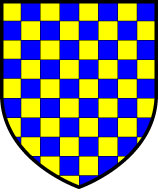 |
| Father* | Sir William de Warenne2,3,4 b. c 1166, d. 27 May 1240 | |
| Mother* | Maud Marshal2,3,4,5 b. c 1192, d. 27 Mar 1248 | |
Sir John de Warenne|b. c Aug 1231\nd. 27 Sep 1304|p100.htm#i2999|Sir William de Warenne|b. c 1166\nd. 27 May 1240|p101.htm#i3001|Maud Marshal|b. c 1192\nd. 27 Mar 1248|p90.htm#i2671|Sir Hamelin Plantagenet|b. c 1130\nd. 7 May 1202|p70.htm#i2077|Isabel de Warene|b. c 1137\nd. 12 Jul 1203|p101.htm#i3002|Sir William Marshal|b. 1146\nd. 14 May 1219|p89.htm#i2644|Isabel de Clare|b. 1173\nd. 1220|p100.htm#i2977| | ||
| Charts | Ann Marbury Pedigree |
| Birth* | circa August 1231 | 6,3,4,1 |
| Marriage* | August 1247 | Principal=Alice de Lusignan6,3,4,7,1 |
| Death* | 27 September 1304 | Kennington, Middlesex, England6,3,1 |
| Burial* | Lewes Priory, Sussex, England3,1 | |
| Name Variation | Sir John de Warene6 | |
| Arms* | Checky or and azure (M. Paris III), Chequy az. and or (Charles, St. George). "Sir John, Count de Garein, chevetain de quarte bataile, porte Eschekere d'or et d'azure" (Falkirk). "John, the good Earl of Warren, held the reins to regulate and govern the second squadron, as he who knew well how to lead noble and hoourable men. His Banner was handsomely chequered with gold and azure" (Carlaverock). Sealed letter to Pope, 1301: a. Az. semee' of fleurs de lis or, a bordure charged with lions passant gardant (Hamlyn Plantagenet). b. Chequy or and az. (Warren). Legends: "S. Johis de Warennia, Comitis de Surreia," and "S. Johannis, Comitis de Warennia" (Barons' Seals).1,8 | |
| Event-Misc* | 1254 | He was with Prince Edward in Gascony1 |
| Event-Misc | 14 September 1254 | He offered himself as hostage for the King's debt in Bordeaux9 |
| Event-Misc | September 1255 | He was instructed to escort the King of Scotland to King Henry III1,9 |
| Event-Misc | 1257 | He escorted Richard, Earl of Cornwall, King elect of the Romans, to Almain1 |
| Summoned | 14 March 1257/58 | serve against the Welsh9 |
| Protection* | 28 December 1260 | overseas with Prince Edward10 |
| Event-Misc | 18 September 1263 | He was appointed to treat with Llywelyn ap Gruffudd9 |
| Event-Misc | 24 December 1263 | He was appointed keeper of Surrey and Sussex9 |
| Event-Misc | April 1264 | He garrisoned Rochester Castle and was beieged for about a week by Simon de Monfort before being relieved by the King9 |
| (Henry) Battle-Lewes | 14 May 1264 | The Battle of Lewes, Lewes, Sussex, England, when King Henry and Prince Edward were captured by Simon of Montfort, Earl of Leicester. Simon ruled England in Henry's name until his defeat at Evesham, Principal=Henry III Plantagenet King of England, Principal=Simon VI de Montfort11,12,13,14,15,16 |
| Event-Misc* | 10 May 1265 | John de Warenne landed at Pembroke with William de Valence and sued for the return of his lands, Principal=Sir William de Valence9 |
| Event-Misc | 8 June 1265 | Prince Edward returned to England and joined him9 |
| Event-Misc | 1 August 1265 | Kenilworth, He was with Prince Edward9 |
| Event-Misc | 7 May 1266 | London, Archers were sent to him9 |
| Event-Misc | May 1267 | He induced the Earl of Gloucester to submit9 |
| (Witness) Death | 10 August 1269 | Westminster Hall, Alan la Zouche died after he was violently attacked by John de Warenne. His son Roger, barely escaped, Principal=Sir Alan la Zouche1 |
| Summoned* | 2 July 1270 | the King's court for trespass, having wounded Alan la Zuche and his son Roger in Westminster Hall in the presence of the King and his Justices.17 |
| Event-Misc | 4 August 1270 | He was pardoned in the death of Justice Alan la Zouche on payment of a 10,000 m fine.1,17 |
| Event-Misc | 20 November 1272 | He swore fealty to King Edward9 |
| Event-Misc* | 12 February 1276 | Livery to John his land of Brumfeld and Yal, which he had given to his son Wm. to hold of him, and also Scolethorp Manor, which William held., Principal=Sir William de Warrenne17 |
| Summoned | 1 July 1277 | serve against the Welsh, he acknowledges 11 Kt. Fees, and will serve in person with 10 Kts.17 |
| Event-Misc | May 1281 | John's daughter, Isabella, lately contracted in marriage to Jn. de Balliol, is w. of said John, and is to have dower of Balliol lands, Witness=John Baliol, Witness=Isobel de Warenne17 |
| Event-Misc | 1282 | He was heir to his sister, Isabel de Warenne, Countess of Arundel1 |
| Summoned | 30 September 1283 | Shrewsbury, Parliament17 |
| Event-Misc | 1291 | He was appointed keeper of Scotland9 |
| Event-Misc | 27 April 1296 | The Battle of Dunbar, He defeated the Scots1 |
| Event-Misc | 3 September 1296 | He was appointed Keeper of the Realm of Scotland1 |
| Event-Misc | 10 September 1297 | The Battle of Stirling, He was defeated by the Scots1 |
| (English) Battle-Falkirk | 22 July 1298 | Principal=Edward I "Longshanks" Plantagenet King of England18,19,20 |
| Event-Misc | 1300 | Caerlaverock, Dumfrieshire, Scotland, He commanded the 2nd division9 |
| Event-Misc | 1 March 1300/1 | He was involved in diplomacy regarding Scotland and France9 |
| Event-Misc | 12 February 1301/2 | He sealed the Barons' Letter to the Pope9 |
| Title* | Baron of Lewes, Constable of Bamborough Castle1 |
Family 1 | ||
| Children | ||
Family 2 | Alice de Lusignan b. c 1224, d. 9 Feb 1255/56 | |
| Children |
| |
| Last Edited | 5 Sep 2005 |
Citations
- [S284] Douglas Richardson, Plantagenet Ancestry, Warenne 4.
- [S168] Frederick Lewis Weis, Ancestral Roots, 83-27.
- [S218] Marlyn Lewis, Ancestry of Elizabeth of York.
- [S233] Frederick Lewis Weis, Magna Charta Sureties, 151-2.
- [S284] Douglas Richardson, Plantagenet Ancestry, Warenne 3.
- [S168] Frederick Lewis Weis, Ancestral Roots, 83-28.
- [S285] Leo van de Pas, 30 Jun 2004.
- [S325] Rev. C. Moor, Knights of Edward I, v. 5, p. 133.
- [S347] Carl Boyer 3rd, Medieval English Ancestors of Certain Americans, p. 261.
- [S325] Rev. C. Moor, Knights of Edward I, v. 5, p. 160.
- [S284] Douglas Richardson, Plantagenet Ancestry, Plantagenet 4.
- [S325] Rev. C. Moor, Knights of Edward I, v. 5, p. 10.
- [S284] Douglas Richardson, Plantagenet Ancestry, Fitz Alan 7.
- [S342] Sir Bernard Burke, Extinct Peerages, p. 21.
- [S301] Carl Boyer 3rd, Medieval English Ancestors of Robert Abell, p. 218.
- [S347] Carl Boyer 3rd, Medieval English Ancestors of Certain Americans, p. 34.
- [S325] Rev. C. Moor, Knights of Edward I, v. 5, p. 161.
- [S284] Douglas Richardson, Plantagenet Ancestry, Plantagenet 5.
- [S301] Carl Boyer 3rd, Medieval English Ancestors of Robert Abell, p. 125.
- [S347] Carl Boyer 3rd, Medieval English Ancestors of Certain Americans, p. 35.
- [S233] Frederick Lewis Weis, Magna Charta Sureties, 152-3.
Alice de Lusignan1
F, #3000, b. circa 1224, d. 9 February 1255/56
| Father* | Hugh X of Lusignan2 b. b 1196, d. a 6 Jun 1249 | |
| Mother* | Isabella of Angoulême2,3 b. 1188, d. 31 May 1246 | |
Alice de Lusignan|b. c 1224\nd. 9 Feb 1255/56|p100.htm#i3000|Hugh X of Lusignan|b. b 1196\nd. a 6 Jun 1249|p97.htm#i2883|Isabella of Angoulême|b. 1188\nd. 31 May 1246|p55.htm#i1621|Hughes le Brun (?)|d. 5 Nov 1219|p144.htm#i4303|Agatha de Preuilly||p461.htm#i13816|Count Aymer de Valence of Angoulême|b. b 1165\nd. 1218|p97.htm#i2884|Alice de Courtenay|b. c 1160\nd. c 14 Sep 1205|p97.htm#i2885| | ||
| Charts | Ann Marbury Pedigree |
| Birth* | circa 1224 | Lusignan, Vienne, France2 |
| Marriage* | August 1247 | Principal=Sir John de Warenne1,2,4,5,6 |
| Death | 2 February 1255/56 | Warren, Sussex, England7 |
| Death | 7 February 1256 | 1 |
| Death* | 9 February 1255/56 | 4,5,6 |
| Burial* | Lewes Priory, England2 | |
| Name Variation | Alfais1 | |
| Name Variation | Alix le Brun2 |
Family | Sir John de Warenne b. c Aug 1231, d. 27 Sep 1304 | |
| Children |
| |
| Last Edited | 5 Sep 2005 |
Citations
- [S168] Frederick Lewis Weis, Ancestral Roots, 83-28.
- [S218] Marlyn Lewis, Ancestry of Elizabeth of York.
- [S168] Frederick Lewis Weis, Ancestral Roots, 153-27.
- [S233] Frederick Lewis Weis, Magna Charta Sureties, 151-2.
- [S285] Leo van de Pas, 30 Jun 2004.
- [S284] Douglas Richardson, Plantagenet Ancestry, Warenne 4.
- [S347] Carl Boyer 3rd, Medieval English Ancestors of Certain Americans, p. 261.
- [S233] Frederick Lewis Weis, Magna Charta Sureties, 152-3.
Close