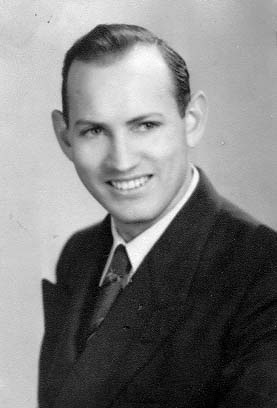
 I was born at my parents' home at 265 West, Third North, in Lehi,
Utah County, Utah on September 11, 1916. I was [the] third son and fourth
child of Junius Crossland Banks and Edna
Myrtle Hackett Banks. An older sister, Helen, had passed away at the age
of two years about four years previous to my birth. The house we lived in at
that time was a two room brick home with two additional lean-to rooms of frame
construction tacked on to the west side. This house had inside cold water. Hot
water was heated on kettles on the stove. We bathed in galvanized laundry tubs
and toilet facilities were of the outdoor variety.
I was born at my parents' home at 265 West, Third North, in Lehi,
Utah County, Utah on September 11, 1916. I was [the] third son and fourth
child of Junius Crossland Banks and Edna
Myrtle Hackett Banks. An older sister, Helen, had passed away at the age
of two years about four years previous to my birth. The house we lived in at
that time was a two room brick home with two additional lean-to rooms of frame
construction tacked on to the west side. This house had inside cold water. Hot
water was heated on kettles on the stove. We bathed in galvanized laundry tubs
and toilet facilities were of the outdoor variety.
My earliest recollections concerned the terrible influenza epidemic which ravaged the country in 1918. I can remember that our entire family was down with the flu. The doctor who attended us attempted to give me some type of medicine. Apparently I was not too sick for I remember I resisted taking the medicine until my parents and doctor gave up trying to get it down me. I remember wanting to get out of bed and when I was allowed to do so I staggered from the bed which was in one corner of the kitchen to the opposite corner and banged my head against the drain pipe of the kitchen sink.
My father was the science teacher at the local high school and although funds were meager while he was raising a family we were probably a little better off than the majority of families in the town. My mother and father were both raised under austere circumstances and thrift was an ingrained characteristic of them both. Since school teachers had long summer vacations, my father devoted his summers to the production of fruit, berries, and vegetables on a plot of ground to the rear and side of the house. He was an expert gardener and tried to impart of his skill to his sons. At an early age I learned how to hoe weeds and irrigate and cultivate rows of garden produce, as well as how to harvest crops and prepare food for canning. My mother canned tremendous amounts of fruit and vegetables.
Our income was also augmented by raising chickens and an occasional pig. We also had two cows and one of my chores was to take my turn driving the cows to our pasture which was located out of town a mile away. Each fall our cellar was stocked with huge supplies of potatoes, carrots, parsnips, onions, and apples while the pantry above the cellar had shelves crowded with canned fruit and vegetables.
When I was about four a one half years of age, my sister, Margaret, was born. She also was born at home. Her birth came as a complete surprise to me. I had not heard my parents discuss the coming event at any time. I was greatly relieved to have a new baby in the family as I had been highly indignant when I was referred to as the baby of the family.
Our family enjoyed a close relationship and I would have to say I had a happy childhood. Soon after my sister was born my father remodeled our home, tearing off the lean-to at the rear and adding a bathroom and two bedrooms and a laundry room on the ground floor and two bedrooms upstairs. We slept in the hayloft of the barn while the remodeling took place. We now had hot and cold running water but the water was heated from a jacket inside the coal burning kitchen stove. In the summer time the kitchen was mighty warm when we wanted to use hot water. We gradually acquired new appliances as they were invented or became generally available. Our first radio was put together by my oldest brother, Merril, and this relegated our windup phonograph to the attic. The radio became our chief source of amusement on long winter nights. We didn't get a refrigerator until I was in college and about that time natural gas was available and our coal stoves were discarded and a hot water heater installed as well as gas furnaces.
The neighborhood I grew up in was a young neighborhood. Almost all the neighbors had children and we never lacked for playmates. During the summer evenings the street light on the corner was a favorite gathering ground for all the kids and we would play various games. At nine P.M. a curfew bell down town about three blocks away would toll and this would be the signal for the dispersal of the group. A pleasant custom for our group would be the weekly matinee at the local movie house. Admission was five cents for those under twelve years of age and ten cents for those twelve and over. They would show a comedy, a serial, and then the main feature. In order for my brother, Wallace, and me, and my sister to attend the movie each Saturday afternoon we would have to complete household chores Saturday morning. Mother would make up a list of things to be done and we would choose in rotation the jobs we would do always taking the easiest job still available. These jobs would consist of taking out ashes, filling the coal and kindling boxes, put fresh bedding on the beds, take out rugs and beat them, dust floors and furniture, etc. So each Saturday the house received a rather good cleaning with everyone helping.
I attended the local schools which were all located about four blocks from home. As a general rule I would come home for lunch at noon. My father would take his lunch only on the days when he had hall duty. Most of the time the main meal of the day would be at noon. Conversation at the dinner table was mostly about religious subjects.
We were members of the Lehi First Ward and the chapel was an ancient adobe structure located about four blocks away. We were all regular in attendance at church and I was duly ordained in all the offices of the Aaronic Priesthood beginning with the office of a Deacon when I was twelve years old. My father ordained me to all the offices in the priesthood as well as performing the blessing when I was a baby and also the baptism and confirmation. I was exposed to scouting during my Aaronic Priesthood years but wasn't too motivated to go very far down the scouting road. I did attend a scout camp for one week during the summer. This camp was located on the eastern slopes of Mt. Timpanogos. The weather was so rainy that week that the hike up to the summit of the mountain was not conducted. However, I have made the hike to the top on four other occasions. Another pleasant activity was attending a summer camp for about three days each summer conducted by the M.I.A. at the ward level. This camp was called Mutual Dell and was in American Fork Canyon. Most of our activity was centered around the school and the church.
I always enjoyed athletic activities both as a participant and as a spectator. I was never good enough at sports to make the official high school or college teams but I did participate in intramural activities and church basketball. I was the last substitute on the basketball team that won first place in the all church tournament. I played with a team from Provo while attending B.Y.U. The previous year we had won third place in the all church tournament. Besides basketball I enjoyed playing tennis, softball, and swimming.
As a young boy I didn't have the opportunity to travel very much. Aside from an occasional trip to Salt Lake to shop or visit relatives or to Alpine and Provo Bench we generally stayed close to home. When I was about eleven years old we did take a trip to the canyons of southern Utah. We were gone for about a week. We camped out at night and did our own cooking. We traveled in an open touring car, a 1922 Nash. We had a wreck on a mountain curve east of Cedar City and my father had to hitchhike to Cedar City and await there for a new wheel to be shipped by railroad from Salt Lake City. We children enjoyed ourselves in the mountains during this interval. During this trip we visited Zion's Canyon, Cedar Breaks and Bryce Canyon. My father took numerous pictures during this trip.
Shortly after this trip, my brother Merril was called on a
mission to the German Austrian Mission. He had been there about a year when
he became ill, probably due to a very severe winter they had in Germany that
year. After being in the hospital for many months he was deemed well enough
to travel home so he was released. Although being critically ill he enrolled
again in the Brigham Young University and attended until his health would not
allow him to continue. He passed away on March 5, 1931, and was awarded a degree
from B.Y.U. posthumously.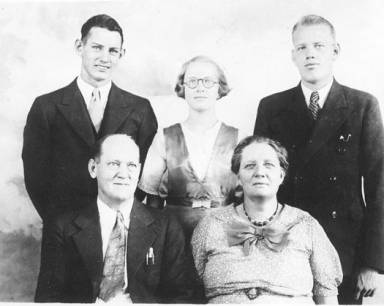
My next older brother, Wallace began attending B.Y.U. while I was a junior in high school. He would commute to Provo each day with other students either from Lehi or American Fork. At the end of my senior year in high school I was chosen as salutatorian for the class of 1934. This honor was given to the person of the opposite sex from the valedictorian who had the highest grade average during the past four years. I had also had the honor of being on the year book staff as photographer during my junior and senior years. During the summer of 1934 Wallace was called on a mission to the Canadian Mission with headquarters in Toronto. That fall I enrolled at B.Y.U. with the object in mind of becoming a science teacher in high school like my father. Don Fitzgerald and I rented a one room shack at the rear of a house on 8th North for 6 dollars a month. It had a monkey stove we could use to heat the room and do a limited amount of cooking on. We also had a hot plate. Our main meal was at noon which we ate at the home of Mrs. Kirkham, a widow and a relative of Don's mother. We would usually hitchhike a ride home on weekends and take our dirty laundry and empty fruit jars and get a new supply of goodies like home made bread and pastries and bottled fruit. In this way our expenses were kept at a minimum. I kept meticulous account of expenditures for awhile and costs for one quarter of college came to about $60 including tuition which was about $30.00 The great depression was in progress and commodities were cheap.
By the time I had finished two years of college, my brother had completed two years of his mission and was ready to come home. My parents decided we would be able to finance a trip to Toronto to bring him back. By this time we had a 1934 Chevrolet Sedan which seemed to be in pretty good condition. This was the first time I had left the State of Utah since my birth. We traveled to Cheyenne the first day and to Council Bluffs the next. The third night found us in Illinois. We would try to find a tourist court to spend the night but the farther east we got the more difficult it became to find what we wanted. We traveled without trouble except for a flat tire going across Nebraska where the heat built up in the tire and melted a patch from the inner tube. After four days we arrived at Windsor, Ontario, which was across the river from Detroit and there we met Wallace. We spent some time in Canada staying with missionaries or with members of the Church. We attended a district conference in Hamilton and met many of the missionaries. We then went to Toronto where Wallace got his release and settled up his affairs. We then drove to Niagara Falls. We arrived after dark and spent the night on the Canadian side. Mother and Margaret spent the night in a tourist home while we men spent the night sort of camping out. Tourist courts were practically unavailable that far east but tourist homes were abundant. Tourist homes were private residences who had several rooms available for overnight guests. These have all long since been replaced by the modern motels. The next day we visited the spectacular Niagara Falls from the American side and visited the shredded wheat factory that was located there. The next stopping place was Palmyra where we visited the boyhood home of the Prophet Joseph Smith. We slept in the Smith farmhouse and some members of the family slept in the same room that was visited by the Angel Moroni. We saw the Sacred Grove and the Hill Cumorah. Another stopping place was the Kirtland Temple in Ohio. We were conducted on a tour through the building by the Reorganized Church. Due to a lack of funds we could not loiter for further sightseeing so we headed for home. At Hannibal, Missouri, a connecting rod on the car went out and we stopped there for several hours while repairs were made. After this the remainder of the trip was accomplished without difficulty.
In the fall of 1936 both Wallace and I entered B.Y.U. setting up batching quarters in an upstairs room of a house on the corner of 5th North and 4th East in Provo. Cecil Webb of Lehi was also with us along with Lloyd McCallister from Kanab and Morris Shields from Canada. Johnny Palmer from Grantsville slept upstairs but took his meals downstairs with the Jones family. It wasn't long until Cecil and Wallace were married and moved out. Wilburn Ball of Lehi moved in to fill the vacancy along with Eldon Richardson from the southern end of Utah county. Wilburn was a returned missionary and was a good stabilizing influence on the occupants of our quarters. It was during my junior year in college that I first began to pay much attention to girls. I had had a few dates in the previous years but mostly for special occasions and seldom with the same girl more than a very few times. This year I made the acquaintance of a girl from Brigham City named Joan Call. She was a freshman and was the sister of Don Carlos Call who was a junior and classmate in quite a few classes. We had lots of good times together and by the end of the school year we had quite a romance going. During the summer vacation of 1937 I took a job as carpenter's helper for a construction firm in Salt Lake City. The firm consisted of two Swedish immigrants who built houses and some larger structures. I had made the acquaintance of one of the partners when they were the successful bidders on remodeling the old adobe chapel of the Lehi First Ward. I lived at the home of one of the partners in Salt Lake and was paid four dollars a day plus board. I had already picked up some of the fundamentals of house building when I worked with my father building a house for my Uncle John in Salt Lake City but I gained more information about how to build a house from working on this job. I did not enter school in the fall of 1937 for my senior year as I was anticipating a mission call before the end of the fall quarter. I continued working as a carpenter until the mission call came to the New England Mission, presided over by Carl F.Eyring, an eminent scholar and Dean of the science department at B.Y.U. who was on a leave of absence to preside over the newly organized New England Mission.
In those days missionaries stayed at the mission home for about 10 days. We were allowed to go home on weekends if we lived within commuting distance. My farewell was held in the old Relief Society building on the corner of Main Street and 2nd West in Lehi as our chapel was being remodeled. It was held on Sunday after I had been at the Mission Home for a week. The classes at the Mission Home were taught by J. Wiley Sessions and William E. Berrett.
I received my endowments on November 18, 1937. All the missionaries went through the temple one more time after that. We were also conducted on a tour of the temple and were allowed to enter many rooms that the usual temple patron does not see.
We left Salt Lake City on Thursday afternoon on December 2, 1937. There were two coach loads of missionaries going eastward. We used the Union Pacific Challenger, an air conditioned, streamlined coach which was pulled by a powerful steam driven locomotive. I had a rather tearful farewell with my family and a few friends and relatives who had gathered at the station to see me off. I had said my farewells to Joan the night before. There were six elders and two lady missionaries going to the New England Mission. Among them was Weston Harper and Elder Freeman, both from Idaho. I had known Weston at B.Y.U. We arrived at Chicago after two days of travel and had to transfer to another line to continue eastward. At various stops along the way we had said good-bye to various individuals and groups who had reached their destination. We had several hours to spend in Chicago. We visited the famous Marshall Fields retail store and rode the new invention, the escalator, to the top. We also visited an art museum. Our next train ride took us across Michigan and into Canada to Niagara Falls where our itinerary permitted us to stop for several hours to see the sights. After leaving Niagara our group found ourselves traveling alone as the Eastern States missionaries had taken trains going farther south than Boston. We were met at the Boston station by a missionary from the Mission Home. He probably recognized us by the green look around our gills. The Mission Home was on Lexington Avenue in Cambridge which was just a block from Harvard University. We were allowed to sightsee around Boston for a short time and the next day we were dispersed for our various fields of labor.
I was sent to Manchester, New Hampshire, the largest town in the state. It was an industrial town and had many inhabitants from the French Provinces of Canada who were practically all Catholics. I was assigned to Elder Brown from Mesa who had entered the mission field at 17 years of age. Elders Osborn and Longhurst were also in Manchester and we all lived at the same house. We moved to a different apartment in about a week due to some unsavory characters also living at the house where we had rooms. In those days we had no organized lesson forms to present to contacts and the work was difficult in that community of predominately Catholic people. In April I was assigned to Elder Longhurst and he was appointed district president of the Canadian District which was composed of the provinces of Nova Scotia and New Brunswick. The New England Mission was composed of parts of the Eastern States Mission and the Canadian Mission when it was created. It now included the two maritime provinces of Canada and the six New England States. Elder Longhurst bought a 1933 Chevrolet sedan in Manchester and we used it to go to Canada. The snow was just melting off the roads and some of the roads in Canada were almost impassable. We first went to New Glasgow in Nova Scotia and stayed for about a week. Elder Longhurst had the privilege of deciding where to set up headquarters. He decided that it would be better at Windsor so that is where we settled staying at a tourist home run by a Mrs. Hatt. Rent was fantastically cheap but we didn't have good facilities for cooking so we ate things cold from cans or jars. Warm weather was a long time coming but when it did come it changed from winter to summer in about two days and then conditions were quite hot. There were about twenty members in and around Windsor and we held Sunday School each Sunday morning and a sacrament meeting each Sunday night. The Sunday School was at the home of Brother and Sister Smith and the sacrament meetings were held in the Shaw residence. We were treated real fine by the members there. As warmer weather arrived, Elder Longhurst and I made a tour of the district and attempted to meet with every member on the books. This tour took us to Halifax and southward along the east shore of the Province to some tiny fishing villages. Then we looked up all the members we could find in New Brunswick which took us almost to the Maine border and far north to near the northern border of New Brunswick. When President Eyring came up for the annual district conference I came back out of Canada with him and was assigned to the Maine District with headquarters in Portland. Elder Price from Phoenix was the district President and I was his companion for a short time and then I was transferred to Sanford, Maine with Elder Thornell from Salina as companion. We held a weekly meeting in Sanford as we had done in Nova Scotia and I gained a lot of experience in delivering talks. Elder Thornell and I were able to play basketball with a local group during the winter and when spring came we were able to play an occasional game of tennis on the courts behind our house. About midsummer I was transferred to the Rhode Island District where Elder Thornell had previously been stationed and found myself his companion again. I was made District President of the Rhode Island District which had part of Southeastern Massachusetts and Cape Cod. I needed a car to get around so my folks sent some money and I bought a 1934 Plymouth 2 door. During the late summer the Mission President gave permission for us to see the world's fair in New York accompanying our landlady and her sister in her sister's car. The church had lists of church people in the New York area who would be willing to take guests into their homes so we stayed on Long Island for one or two nights. This trip was my first experience with freeway driving. The Merrit Parkway ran from western Connecticut down into New York. At intervals there would be a toll gate that would require a ten cent contribution. Another event which the missionaries looked forward to was the annual Mission Conference which was held at the Birthplace of the Prophet Joseph Smith near South Royalton, Vermont. A local firm catered three meals a day for about three days. The Elders slept on bunk beds with straw mattresses in barn-like buildings and the ladies slept in the farmhouse. The time was devoted to testimony meetings and presenta- tions on how to do better missionary work with time out for softball games and other forms of recreation. In the fall of 1939, I moved from Washington, Rhode Island to Fall River, Mass. About this time we received an influx of missionaries from Europe who had been evacuated because of World War II. We received about four from England into the Rhode Island District. We had a well organized branch in Providence and another not so well organized in New Bedford where the only Church owned Chapel was located. One Saturday afternoon The Elders helped me put new rings in the Plymouth at the home of a Brother Houghton in New Bedford. The southern districts of the Mission had many more members than did the northern districts in Vermont, New Hampshire, Maine and the Maritime Provinces. I was released from my mission in early December of 1939. We were given cash equivalent to train fare home. Elders Harper and Freeman and I pooled our funds and drove home in the old Plymouth down the east coast to Florida and across the southern tier of states to Arizona. We had to stop at New Orleans and get the front wheels aligned as we were were wearing out the front tires and had to buy some used tires along the way. From Arizona we visited the Hoover Dam and the Utah parks arriving home about two weeks after release.
One of my first concerns after arriving home was to find out how I stood with Joan. She had been writing to me all the time I was gone but the last year the letters had become rather infrequent and I thought I had detected somewhat of a change in the warmth of the letters. Since college had recessed for the Christmas holidays, it was necessary to go to Brigham City to see her. She treated me cordially enough but I could tell that the old spark was not there. She had of course dated other boys while I was gone as we had not tied any strings to each other and she had fallen in love with some one else. I stayed overnight at her home and left the next morning. When the winter quarter opened, I enrolled again at B.Y.U. to begin my senior year. It was soon apparent that I would need another full year of courses to complete my teaching requirements so I left school at the end of the winter quarter and went back to house construction with the Swedes in Salt Lake. In the meantime I started to keep company with Maeda Murri from near Rexburg, Idaho. She was a return missionary from the New England Mission. She was attending B.Y.U. Before the summer was half over I was laid off from work in Salt Lake due to a slow down in the business. The depression was still on and jobs were hard to get. Before the summer was out, my parents and I were able to take a trip to Yellowstone National Park. We stopped in Rexburg and persuaded Maeda to go with us through the park. We had a fine trip. Just before the fall quarter started, I received a letter from Maeda stating that she was going to marry the son of one of her father's friends. She said she was not certain where she stood with me and that she had this definite chance to get married. By this time my ego was shattered. I had been rejected by two girls even before I had asked them. However, I knew that the college was still full of very nice girls and that I probably would have some kind of luck during my senior year. I had been favorably impressed by a girl named Winifred Dean. I had a couple of classes with her the previous winter quarter and I decided if she was back in school I would try my luck in that direction. She was back. I finally got up enough nerve to ask her to accompany me to a football game at the University of Utah and to a dance afterward sponsored by the Delta Phi, a missionary fraternity. She accepted the invitation and my foot was in the door. I must say that progress in this respect was very slow and uncertain. We went to a variety of functions together but I never got over the feeling that to her I was just a casual friend.
At the beginning of the fall quarter I applied for flight training which was to be offered at B.Y.U. at government expense through the Civil Aeronautics Authority. After passing the physical examination, I was accepted for flight training. We trained at the Provo airport in single engine side by side Taylorcrafts of about 1940 manufacture. The ground school was taught by Wayne Hales. We learned fundamentals of meteorology and flight rules and a small amount of how to care for aircraft engines. We soloed after eight hours of dual instruction and were awarded private pilot's licenses after forty hours of flying training. As a direct result of this training, the entire direction of my future life's vocation was turned around although I was not aware that such would be the case until later. By this time I had all of my classes required for a major in chemistry and a minor in physics so my efforts were directed toward classes in education and psychology and practice teaching. I did practice teaching in chemistry at the B.Y. High School under Loren Bryner and in physics at Lincoln High School in Orem.
Graduation time was a time of excitement. A senior ball was held in the ballroom of the new Joseph Smith Building. I took Winifred to this ball. Several of our graduating friends had already made plans to marry and they asked us about our plans. I told them we were just good friends and had no plans of that nature under consideration. The next day graduation was held in the auditorium of the new Joseph Smith Building. This was the fifth of June, 1941.
At last I had graduated and had prepared myself for a useful job but no jobs were in sight. The great depression still had not relaxed its grip on Utah. Before school had ended I had noticed an announcement for graduate training in meteorology to be available for persons with a specified number of hours in physics and mathematics. This training was to be financed jointly by the Civil Aeronautic Authority and the Weather Bureau. Only those persons who had completed the course in civil pilot's training could be accepted according to the announcement. Applicants who were successful would have to agree to accept employment in the Weather Bureau upon completing the training if offered the chance. At the same time the air force was offering the same training with the stipulation that successful applicants would become successful cadets in the air force and become commissioned officers when the training was completed. The military would pay $150 a month plus tuition and books. The Weather Bureau would pay $75 per month plus tuition and books. I applied for training under both deals but had little hope of being accepted. In the meantime I toured construction sites in Salt Lake City in an effort to find temporary work until something opened up in the teaching profession. I had only to inquire at two or three places and was hired to work for a small contractor building a house. I boarded with my sister, Margaret, who had married Myron Burgess who was a plumber's apprentice and they lived in Salt Lake City. I was paid $5 per day. I had just worked about three weeks when word came that if I could pass the regular civil service physical examination I would be accepted for training in meteorology at California Institute of Technology at Pasadena. I lost no time in getting the examination and reported at the school in Pasadena the first week in July after driving the old 1934 Plymouth on the journey. I arranged for room and board with a private family for $35 per month. School would not start until after the July 4th holidays so I looked up my Uncle Charles who lived in the Burbank area. They were glad to see me and said I could stay with them until school started. On July 4th I was invited to accompany my cousin Mildred and her boy friend up the California Coast. I didn't want to horn in on their date but they insisted they would be glad to take me with them so I went in as much as this was my first trip to California and I wanted to see the sights. We went as far north as Santa Barbara and returned.
I spent two nights at my Uncle's home and then reported back to the school. I neglected to mention that I had accepted training under the sponsorship of the CAA and the Weather Bureau. The military had sent me a letter of regret saying my grades were not high enough to qualify for their training. There were about twelve students sponsored by the CAA-Weather Bureau and about 60 army cadets and about 6 private students and 5 navy men who held the rank of Lt. Commander. Courses in dynamic and synoptic meteorology were given along with laboratory work. Also one class in humanities was given so that we could keep up with what was going on in the world. I did pretty good in the lab work and synoptic meteorology but had trouble with the dynamic meteorology as it had been several years since I had studied calculus and the professor spent the entire time presenting and deriving formulas on the blackboard. The synoptic teacher was Irving P. Krick and was nationally famous as a meteorologist. The laboratory work consisted of learning how to plot and analyze weather maps and work up radio sonde reports and make practice forecasts. None of the Weather Bureau students were allowed to take out master's degrees but all the military and private students were allowed to do so. After the U.S. entered World War II our training was speeded up and our course was finished in late February 1942. I was one of five of the Weather Bureau students selected for employment with the Bureau. We were offered positions as Junior Meteorologists at $2,000 per year. My job was to be at Washington D.C. with the five day forecast section and I was to be paid five dollars a day until the paperwork was completed. I began the trip to Utah in the old Plymouth with Blanche Weight of Provo as a passenger. She was going home to attend a wedding. I was driving too fast in the old car and after passing a Greyhound bus I burned out a bearing and the engine froze. I hailed the bus and put Blanche on it. I had to wait for daylight to get to a phone to call a wrecker. I was in the middle of the Mohave Desert. This wrecker was based at a small garage-cafe establishment. We tore the engine down and found it had a broken piston as well as a badly burned bearing. We ordered a new piston from Las Vegas to be sent by bus. When it arrived it was too large for the cylinder bore. Time was wasting so I decided to put the thing together without the piston and go on. Naturally the engine had a horrible vibration in it but at about 40 miles per hour it dampened down a bit. So I proceeded and spent the next night north of St. George at a motel. About midday the next day somewhere near Parowan the vibration broke an oil line and the oil spilled out and before I was aware of what happened the engine froze again. I stopped at a nearby farm house and called home for help. My brother Wallace and Margaret and Myron came and got me with Dad's 1937 Chevrolet and towed the old car to Lehi. I told Dad he could have the tires and gave the remainder of the car to Wallace.
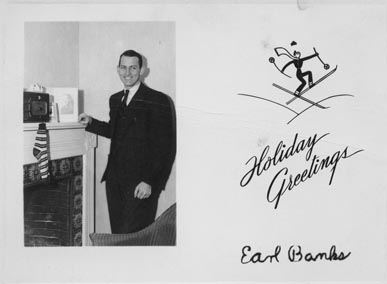 Upon
arriving at Lehi, I was informed by my local draft board that induction into
the military was imminent. I informed the Weather Bureau of my status and they
said to hurry up and report for duty in Washington and they would defer me.
This I did, making the trip to Washington by bus. I stayed with the Murray Hayes
family in Washington, who were friends of my parents, for one night and then
found a place to room. I was helped by a Lehi boy, Kieth Erickson, in finding
quarters. He had been living in Washington for some time and he took me around
and showed me the ropes. I roomed with Glen Borg, an employee of the F.B.I.
He was a returned missionary and his home town was in Salt Lake County. I was
soon integrated into the church there and started making new friends. Instead
of working with the five day forecast section, I was assigned to the historical
maps section in down town Washington. I rode the street cars to work. They had
an excellent public transit system. You could buy a weekly pass for $1.00. Eventually
the rates went up to $1.25. The historical maps section plotted Northern Hemisphere
weather maps from way back in history as far as records were available. These
maps were analyzed in New York University so it could be determined if certain
weather patterns repeated themselves so current forecasters would be able to
make better forecasts. My permanent appointment came through in May of 1942.
I now had a fairly good paying job. My education or schooling apparently was
completed and my next task was to find a wife.
Upon
arriving at Lehi, I was informed by my local draft board that induction into
the military was imminent. I informed the Weather Bureau of my status and they
said to hurry up and report for duty in Washington and they would defer me.
This I did, making the trip to Washington by bus. I stayed with the Murray Hayes
family in Washington, who were friends of my parents, for one night and then
found a place to room. I was helped by a Lehi boy, Kieth Erickson, in finding
quarters. He had been living in Washington for some time and he took me around
and showed me the ropes. I roomed with Glen Borg, an employee of the F.B.I.
He was a returned missionary and his home town was in Salt Lake County. I was
soon integrated into the church there and started making new friends. Instead
of working with the five day forecast section, I was assigned to the historical
maps section in down town Washington. I rode the street cars to work. They had
an excellent public transit system. You could buy a weekly pass for $1.00. Eventually
the rates went up to $1.25. The historical maps section plotted Northern Hemisphere
weather maps from way back in history as far as records were available. These
maps were analyzed in New York University so it could be determined if certain
weather patterns repeated themselves so current forecasters would be able to
make better forecasts. My permanent appointment came through in May of 1942.
I now had a fairly good paying job. My education or schooling apparently was
completed and my next task was to find a wife.
There were numerous single girls in Washington working as secretaries
and I met quite a few girls at church and had an occasional date. Winifred had
written a couple of letters or so to me while I was in California and I had
called on her before leaving Lehi to come to Washington. I seemed to detect
that she regarded me a little more favorably than she had while we were both
in school. She was now teaching school at an elementary school in Provo. We
still corresponded sporadically. I decided to propose marriage by way of letter.
You can bet I really sweat over the wording of the letter and did more sweating
awaiting the arrival of the reply. I was elated when the reply came and she
accepted the opportunity to cast her lot with mine. An edict had been handed
down in the Weather Bureau that due to war time emergencies leave would be restricted
to one week. I worked out a deal with my supervisor that I would work an extra
week overtime before I left if I could have two weeks off. Next I looked about
for a suitable used car to make the trip in. Gasoline was rationed east of the
Allegheny Mountains so a car in Washington was not of too much value. I bought
a 1934 Buick two door sedan for $120.00 from Carrol Elford, a Weather Bureau
employee who had recently come from Albuquerque, New Mexico. He assured me the
car would make the trip. I next looked for passengers for the trip to Utah.
By advertising among church people I soon found several people who wanted to
get to Utah. We traveled day and night taking turns with the driving and getting
what rest we could when not driving. The car performed O.K. but the clutch throwout
bearing showed signs of excessive wear. After getting to Lehi, I put in a new
throw-out bearing with the help of my brother, Wallace. These
bearings had a carbon surface and did not last very long. New ball bearing types
had been invented but due to the war they were unavailable.
We were married on September 25, 1942 in the Salt Lake Temple by Mark Austin who was one of the temple officials and a former resident of Lehi. We spent the next day or two in Provo while Winifred recovered from a violent attack of diarrhea which had struck her even on the day we were married. We then loaded what belongings she had that we thought we could take into the back of the car and set forth for Washington. This was the only honeymoon trip we took. We made Denver the first day and visited the next day with her brother, Edwin, who was a missionary in the Western States Mission. We slept at the mission home. He showed us the town and we left the next morning and drove to St. Louis. Two nights later we were in Washington.
Apartments were extremely hard to find in War time Washington. We stayed for a week at my rooming house. I don't remember where Glen Borg slept during this time but he graciously moved out of the room for that week. Again I called on Kieth Erickson for help and he steered us to an apartment we could live in if we could manage the rest of the house which had about half a dozen rooms on three floors and needed to be continually rented. This apartment had a kitchen and a living room and bed room combined. The bathrooms were for joint use by all the tenants and there was one on each floor.
Winifred was able to get a job at the Weather Bureau in the historical maps section. I had now been transferred to the analysis section for historical upper air maps so we worked at different spots in the city. I bought a second hand bicycle and pedaled to work when the weather was good as transfer connections to the office on G Street N.W. were not good from where we lived. We had a good bit of difficulty in keeping the rooms rented as the heating facilities in the house were not too good. We put in application for some new apartments that were being built in S.E. Washington across the Anacostia River. We were able to get [one of] these apartment[s] and were among the first to move in. We bought new furniture from Sears and Roebuck to furnish the apartment. It was one bedroom with a living room and a separate dining room. The kitchen was furnished with stove and refrigerator and there were coin laundry facilities in the basement. To get to work we would take a bus and later transfer to a streetcar. It took almost an hour to get to work. Only rarely would we use the car. Gasoline was rationed at one and a half gallons per week which was of little use.
Before moving into the apartment we were members of the Washington Ward. We both joined the choir which was conducted by Sterling Wheelwright. He was an accomplished organist and the church stationed him in Washington to give organ recitals to the public so the missionaries could give a conducted tour of the building afterward and incidentally tell people more about the church. One of the activities of the choir was to prepare a program of Christmas music at some of the local churches and community groups. After moving to the new apartments we were members of the Capitol Ward and met in the summer house of the Dodge Hotel. I was put in as a counselor in the M.I.A. in this ward. One of the activities I participated in was a three act play called Seven Keys to Baldpate. I was the unsavory character known as Max.
For our first anniversary of our marriage we took a short trip to New York City. People had told us that hotel rooms were hard to find in New York but we went anyway without a previous reservation. The first hotel we tried said that they had no vacancies that were not already reserved. The second hotel luckily had a room we could get but it was far from the luxurious rooms you see in the movies but at least it was a place to sleep. The train trip from Washington to New York takes all night if you leave near midnight and gets you to New York near dawn. We saw the usual sights and went to the top of one of the big buildings, took the Staten Island ferry which goes past Bedloe Island and the Statue Of Liberty. We also took in the famous Rockefeller Center music hall which had the famous rockettes dancing group. The bright lights of Broadway were out however as New York was under war time regulations.
The first summer after our marriage we were able to take a vacation trip to Utah. Due to severe gas rationing in the east, many people in the east were selling their cars to dealers in the west. These dealers were on the lookout for people to drive these cars to the west for them. I contacted a dealer in Salt Lake City. He had me take a train to Scranton, Pa. where I picked up a Plymouth of about 1940 vintage. It was only firing on five cylinders and putting in a new sparkplug did not help its performance but it would run all right at highway speeds. The dealer had supplied me with plenty of ration coupons so I could get gasoline. We tried to get some passengers to help with the driving but could only get one young man. He turned out to be the son of the Jones family in whose home I lived during my Junior year. We left Washington at night and drove as far as we could on the tank of gas we had and then waited for daylight for stations to open so we could continue. Once we left the eastern seaboard behind, we had no difficulty finding gas stations open all night. We drove day and night until we reached Cheyenne we were so tired we holed up in a motel and had a good rest. It was about a day's journey from there. We had a good visit in Lehi and Provo. We had to use the train for the return journey. From Salt Lake to Chicago we rode the Union Pacific Challenger but conditions were somewhat different from what they were when I left for my mission. War time conditions were taxing facilities to the limit. On behind the air condition[ed,] streamlined coaches they had tacked several coaches which had the non reclinable seats, no air conditioning and looked as if they were in use in the days when kerosene lamps were used. We had to open the windows to get ventilation and this allowed soot from the coal burning engine to get on our clothes. But by the time we had been on the train for 24 hours we were able to wangle seats in the better cars forward. After Chicago however we had the same type of train eastward to Washington. It seems none of the eastern lines had anything at all to compare with the Union Pacific Challenger. We survived the trip however and were glad that we were able to make the vacation home to see our folks. At the Weather Bureau I kept hounding the personnel office to see if I could get transferred to Salt Lake City. Eventually they told me of an opening in Albuquerque, New Mexico, they thought I could get. I contacted a couple of men who had worked at Albuquerque and they spoke of it in glowing terms. At least it would be closer to home and we would be able to see our folks more often. By the time the transfer was approved, Winifred was about six months pregnant. The doctor said it would be all right for her to travel but it would be necessary to stop at least twice a day for an hour or so to let her rest. We engaged the United Van Lines to move our furniture. We had to see the ration board about extra gas coupons and we started on our journey near the end of February 1944. We went south into the Carolinas and then west into Tennessee. We ran into some heavy rain most of the way across Arkansas and had to detour around a washed out bridge in Oklahoma. As we entered New Mexico we spent the night in Tucumcari. A snow storm that night left several inches of snow on the road near Clines Corner and we had difficulty getting up some of the hills and there were numerous cars [that] had skidded off the road. As we came down out of Tijeras Canyon there was little if any snow in Albuquerque. Rent houses were almost impossible to find. We stayed in a motel the first week and were able to rent a small three room house from Milton Peine's uncle for a month after which we moved into a small three room house which we bought. This house was located at 3803 North Third Street. With a new baby on the way we decided we needed more room. We borrowed about two hundred dollars from my folks and I began to turn the attached garage into a bedroom. My father came down on the bus and gave me some help.
When it was time for our first child to be born Winifred's mother came to help out. Gordon was born on the fourth of June, 1944, the day the allies took Rome. Winifred was in labor a long time and the doctor finally had to take the baby with instruments because of the unusually large head Gordon had. As a consequence his face was rather beat up and it was several months until he was back to normal. He suffered quite a bit from colic and since we were new parents we worried quite a bit about him.
D-Day in Europe occurred two days after Gordon was born and I found myself in Santa Fe taking a physical examination to see if the military could use me. The Weather Bureau was no longer able to get deferments for its personnel. The examination was rather superficial and I would have been inducted that very day but I asked them about varicose veins. They said they didn't want people that had them. I said I had them. They looked at me a little closer and said I had them. I was then given a permanent deferment.
My work at the Weather Bureau in Albuquerque was as a forecaster and has not changed substantially through the years although new electronic aids have gradually helped us make better forecasts. In 1944 the forecaster would have to plot and analyze a surface map before making a forecast. My training at Cal Tech and the work at the historical maps section had given me a good training for map [p]lotting and map analysis. The office is open 24 hours a day and seven days a week, so I take my turn at Sunday and night work. In Washington there had been very little Sunday work and no night work. I was able to get a supplementary gas ration as I would have to go to work sometimes when bus service was unavailable. But most of the time I rode the bus and would transfer down town.
We saved up our gas stamps and in September, 1944, we took a trip to Redmesa to see Winifred's sister and her family. The road to Cuba was paved but very poorly but from Cuba on it was dirt road and in poor condition. We left Albuquerque in late afternoon but didn't arrive at Redmesa until 2:00 A.M. Through the years the roads and cars have improved so that we can make the trip now in about three and a half hours.
Winifred's sister, Roberta, came to live with us during the
winter and early summer of 1945. She took a job with the Albuquerque National
Bank in the book keeping department. About this time I was installed as the
superintendent of the Sunday School replacing Garland Bushman who was a salesman
and had to be out of town a good deal. The church here had only one branch but
it was growing rather rapidly.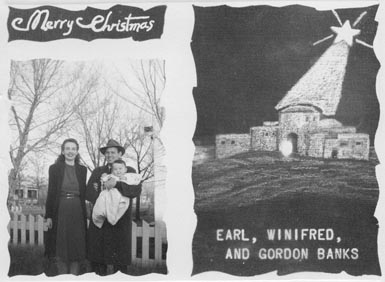
In August of 1945 we made our first trip to Utah to see our folks since we had moved to Albuquerque, and incidentally to take Roberta back home. We had saved our gas stamps and some friends in the bureau had given us some. Gordon was 14 months old. After reaching Remesa we took on additional passengers composed of Mildred and her three sons Dean, Russell, and Robert. The roads were paved most of the way but there were still stretches of dirt road. We kept our speed down to about 45 miles per hour. Despite this we were plagued by a number of flat tires on our war weary car. Milton had given us a couple of used tires before we left Redmesa as he also had a stake in getting us safely to our destination and they were sorely needed. We had to make most of the repairs on the road, patching the inner tubes and pumping up the tires by hand. Roberta was a good hand at helping to change tires and make repairs. After passing Soldier Summit we had no more trouble. We arrived at Provo well after midnight. This was a trip the adults in the party will never forget. The next afternoon we went to Lehi to surprise my parents who had no idea we were coming. They were entertaining relatives in the backyard when we walked in so we were able to see many that we would not otherwise have been able to visit.
V-J Day occurred while we were in Utah and gas rationing was
immediately removed. However, the pipeline of tires was a long way from being
full and we were not able to get any new ones in Salt Lake City. On the trip
back we had a couple more flat tires and in Cortez we were able to get a tire
made of reclaimed rubber.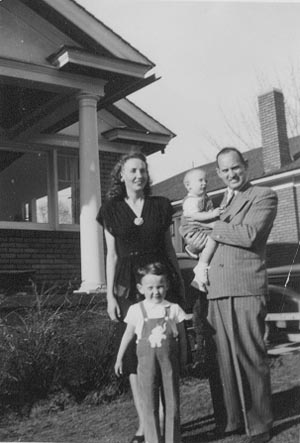 This tire was almost worthless however and by the time we got as far as San
Ysidro we had to stop and put a boot in this tire to cover a large crack which
had appeared in the sidewall. The tire still had a large bulge in the side but
we went the remaining 40 miles without incident.
About 1946 the West New Mexico District was created and our branch was reorganized.
I was installed as clerk of the Branch in place of James Barton who was put
in the Branch Presidency and Theron Hutchings was Branch President. I was in
this position for several years during which time the branch grew to such size
that new quarters were a necessity. We planned to remodel the building and enlarge
it. This work was finished and the new Chapel dedicated in 1952 and shortly
afterward I was released as branch clerk and installed as second counselor in
the branch presidencywith Theron Hutchings as President and George Lemmon as
Second [First] Counselor.
This tire was almost worthless however and by the time we got as far as San
Ysidro we had to stop and put a boot in this tire to cover a large crack which
had appeared in the sidewall. The tire still had a large bulge in the side but
we went the remaining 40 miles without incident.
About 1946 the West New Mexico District was created and our branch was reorganized.
I was installed as clerk of the Branch in place of James Barton who was put
in the Branch Presidency and Theron Hutchings was Branch President. I was in
this position for several years during which time the branch grew to such size
that new quarters were a necessity. We planned to remodel the building and enlarge
it. This work was finished and the new Chapel dedicated in 1952 and shortly
afterward I was released as branch clerk and installed as second counselor in
the branch presidencywith Theron Hutchings as President and George Lemmon as
Second [First] Counselor.
In the meantime several important events had occurred in the family. Ronald was born on the sixth of June 1947. He was a blond haired baby and he didn't eat good and was constipated. We had to put a medicine in his bottles with his milk to keep him regular. As he was getting near the age when he could walk I remember that he would always go at top speed in his walker, sometimes picking it up and running with himself inside. Winifred's mother came down again to be with us during Ronald's birth. Our first daughter was born February 7, 1949. For this event my mother came down to be with us and I remember she was highly impressed by the warm February days we had while she was here. That was the year Utah had such a severe winter with heavy snow. With our growing family we decided to build another bedroom on to our house. I bought a used cement mixer from one of my Weather Bureau co-workers to help pour the foundation and to mix the plaster and stucco. We put the room on the back of the house andinstalled a floor furnace and air conditioner and hardwood floors. We had a large corner window of steel sash and tiers of drawers and ample closet space. We painted it green with the woodwork in two tone green and it was really a beautiful room. We kept adding to the family as well as the house and our second daughter was born April 8, 1950.
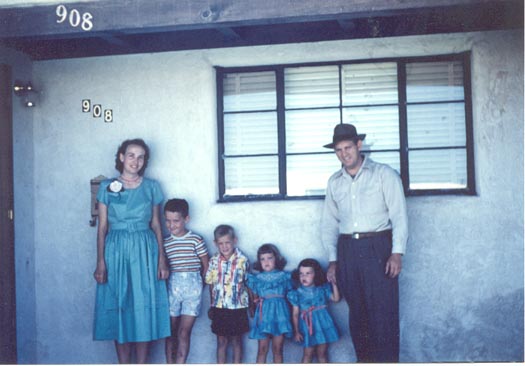 Despite
our three bedroom house we still felt we needed larger quarters. I had always
had a desire to own my own home so I inquired at a savings and loan establishment
to see if I could get funds to build a house. The[y] would not lend me any money
even though we owned our home free and clear of any mortgage. They said the
lot had to be fifty feet wide before they could loan money on it. After letting
several more opportunities go by to buy a home we finally bought one at 908
Indiana SE. This was a three bedroom home with a dining room or a four bedroom
home without a dining room. We had a set of dining room furniture which I had
made, a solid oak table and six upholstered chairs.
Despite
our three bedroom house we still felt we needed larger quarters. I had always
had a desire to own my own home so I inquired at a savings and loan establishment
to see if I could get funds to build a house. The[y] would not lend me any money
even though we owned our home free and clear of any mortgage. They said the
lot had to be fifty feet wide before they could loan money on it. After letting
several more opportunities go by to buy a home we finally bought one at 908
Indiana SE. This was a three bedroom home with a dining room or a four bedroom
home without a dining room. We had a set of dining room furniture which I had
made, a solid oak table and six upholstered chairs.
We moved to the house on Indiana Street by renting a trailer and by making several trips. The neighborhood we moved into was a rather young neighborhood with most families having several children. Our youngest child, Peggy, was about one year old when we moved and our oldest, Gordon, was in first grade. The children had plenty of playmates in the neighborhood. We got along fine with the neighbors and engaged in several co-operative projects such as building of block walls along the lot boundaries and putting in sidewalks in front of the houses. We had a 1947 Kaiser and a little later bought a 1949 Packard when it was three years old.
When Ronald was about five years old, he developed appendicitis and was operated on by Dr. Kempers and assisted by Winifred's baby doctor, Dr. Royer. He had a hard time after the operation as he had trouble getting his bowels to functioning again and we were quite concerned about him. But he recovered O.K. The next Christmas I gave the two boys some lariats for Christmas and I was showing them how to throw the rope when I stepped on a rainbird sprinkler head which protruded from the surface of the lawn about six inches. This shattered the bones in my left ankle. I thought it might be just a bad sprain but in as much as I had developed an ulcer on my left leg because of bad circulation in the leg due to varicose veins I decided to get the ankle checked out at the hospital. The X-rays showed the ankle was broken and they put a cast on the ankle above the knee and also put the knee in a bend so as to make it impossible to walk with the cast on. I was on crutches for about six weeks or so and the cast was removed and a shorter one put on which did not come above the knee. While I was in the cast Winifred developed appendicitis and we had the same team of doctors operate on her.
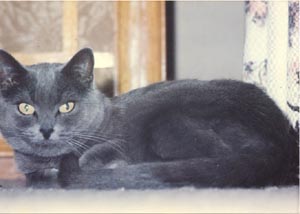 It
was during this period we acquired a pet cat named Smoky. She apparently was
quite frightened of me as I would walk around on crutches. At any rate she didn't
seem to like me at all and we had her for twenty years. Gordon became very fond
of her and she liked him and would mostly sleep on his bed at night. She was
a finicky eater and was an indoor cat. We would put her outside but very shortly
she would wangle her way back inside. We could never brake her of the habit
of clawing the upholstered furniture. She lived to an incredible age of about
20 years.
It
was during this period we acquired a pet cat named Smoky. She apparently was
quite frightened of me as I would walk around on crutches. At any rate she didn't
seem to like me at all and we had her for twenty years. Gordon became very fond
of her and she liked him and would mostly sleep on his bed at night. She was
a finicky eater and was an indoor cat. We would put her outside but very shortly
she would wangle her way back inside. We could never brake her of the habit
of clawing the upholstered furniture. She lived to an incredible age of about
20 years.
There were quite a few Mormon families in the neighborhood and it made carpooling easy for Priesthood meeting, Primary, Sunday School, etc. After our chapel was completed in 1952 it was not long until the branch was too big. It was divided and I was released as second counselor in the Branch Presidency. The mission organized a Seventies group and I was a counselor to Elmo Black in that organization. Shortly after this I was called to be a Stake missionary. I had about three companions in this work, R.K. Rogers, Charles Morgan and Nagle Brower, all three of whom were converts themselves. Some of the people I taught later joined the church after I had been released as a missionary. The church kept growing and another chapel was built at Haines and Valencia and the two branches were divided into four branches. A Stake was formed.
About this time I purchased about two acres of land in the South Valley for seven hundred dollars. It was between Barcelona Road and Blake Road and was isolated to the extent that there was only a lane for access. There were some surplus barracks at Kirtland field which were to be sold to the highest bidder. I tried to buy one but did not bid high enough. At the next sale that was held I bid somewhat higher and was successful in getting a 90' by 30' barracks that had been made into six apartments. I had 90 days to get it removed. I had a two wheel trailer which I hitched behind the car. Everything I removed from the base I hauled in the trailer to our Indiana house and stacked it in the back yard. Once all the material was removed I began the job of building a house in the South Valley. I worked for four years in my spare time on this house, doing all the work myself except for a minimal amount from the remainder of the family. I did hire some of the finish work done on the dry wall, otherwise, I did it mostly by myself, fulfilling a desire I had for many years to build my own house. We moved into the new house in October of 1959. Gordon was in his first year of Sr. High School and went to Rio Grande. Ronnie was in his first year at Jr. High School and went to Ernie Pyle and later to Harrison Jr. High which was soon built thereafter. The girls went to Barcelona Elementary School.
Church wise I had been called to be a high counselor not long after the Stake was organized. George Lemmon was the Stake President who replaced Bill Wilson, the first Stake President who had been in ill health. After serving in this capacity for a few years I was called to be Bishop of the Third Ward which was being divided. The Third Ward had about 900 members and the Fifth Ward was formed from the northern half of the ward. It was a hard struggle to get the positions filled but we finally did it. I was Bishop for four years and was then released and assigned back into the high council. The assignment of Bishop was hard to fulfill in as much as my work at the Weather Bureau demanded Sunday and night work. It seems the church operates on the theory that everyone gets off on Sunday and at night. While I was Bishop I developed a case of sugar diabetes. It was characterized by a significant weight loss and a constant thirst. I had gradually built up weight to about 190 pounds. The Dr. put me on a sugarless diet and I took some pills each day which seemed to regulate the diabetes quite well.
The children progressed through school and Gordon received a scholarship to the University of New Mexico. He kept his grades up and consequently went completely through the school on a scholarship. He majored in physics and went completely through the school and got his doctor's degree in physics.
Ronald went one year at the University of New Mexico and then was called on a mission to Peru and Bolivia. He spent three months in the language training mission at Provo and then flew to South America and was gone for two years. He enrolled back at the University of New Mexico after his mission and went for one year. He then enrolled at the University of New Mexico [Andean Center] for a year of foreign studies and went to Ecuador to study Spanish and Spanish culture. After returning from South America he finished his undergraduate work at U.N.M. and received his degree.
Linda received a scholarship at B.Y.U. She attended there for two years and then married Michael Brown, a student at B.Y.U. from the Chicago area.
Peggy attended B.Y.U. for two and a half years and then married Jerry Duke, a B.Y.U. student from Heber City.
Shortly afterward Ronald married Carlota Leonarda Lara, a woman born in Vera Cruz, Mexico, and went to live for about a year in Illinois and then moved to the Mesa area.
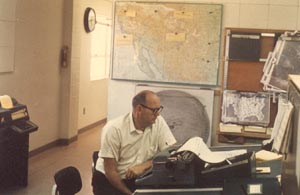 In
late 1971 I was transferred to Birmingham, Alabama to be the forest fire weather
forecaster. I had to accept the transfer or retire. I accepted the transfer.
We moved a few household items in a U-Haul trailer. We rented our house in Albuquerque
and Gordon was living in the basement and sort of looked after our affairs there.
We went to Alabama in late November, going by way of Illinois and having Thanksgiving
dinner at Linda's with her family and Ronald's family. Ronald had rented an
apartment in Aurora. We left Friday afternoon for Birmingham in the middle of
a late fall snowstorm. By the time we were in central Indiana the snow had changed
to rain. As we were approaching the Kentucky border the trailer hitch came loose
from one end of the bumper and the trailer began to sway violently from side
to side. I though it was going to tip the car over before I could stop but instead
the trailer tipped over. Some friendly motorists stopped to help and with the
aid of a truck and some chains the trucker had we were able to right the trailer
again and refasten it to the car. We proceeded on to Louisville, Kentucky and
the next day we obtained a new hitch from the dealer and proceeded on to Birmingham
by night fall Saturday night. The next morning we looked up the church. The
branch president said we could unload our trailer and put our things in a closet
at the church until we could get an apartment. It took several days to get an
apartment. We were the first occupants of a new two bedroom apartment. We bought
some new and some used furniture and were comfortably settled not too far from
work or the church. A library and park were a block away and a post office two
blocks. I worked as fire weather forecaster for several months before a vacancy
in the regular forecast staff occurred. I was able to wangle that job as I like
regular forecasting much better. We integrated into the life of the Birmingham
branch without trouble. I was made a counselor in the Sunday School and shortly
afterward I was made Elder's Quorum President although I was a High
Priest.
In
late 1971 I was transferred to Birmingham, Alabama to be the forest fire weather
forecaster. I had to accept the transfer or retire. I accepted the transfer.
We moved a few household items in a U-Haul trailer. We rented our house in Albuquerque
and Gordon was living in the basement and sort of looked after our affairs there.
We went to Alabama in late November, going by way of Illinois and having Thanksgiving
dinner at Linda's with her family and Ronald's family. Ronald had rented an
apartment in Aurora. We left Friday afternoon for Birmingham in the middle of
a late fall snowstorm. By the time we were in central Indiana the snow had changed
to rain. As we were approaching the Kentucky border the trailer hitch came loose
from one end of the bumper and the trailer began to sway violently from side
to side. I though it was going to tip the car over before I could stop but instead
the trailer tipped over. Some friendly motorists stopped to help and with the
aid of a truck and some chains the trucker had we were able to right the trailer
again and refasten it to the car. We proceeded on to Louisville, Kentucky and
the next day we obtained a new hitch from the dealer and proceeded on to Birmingham
by night fall Saturday night. The next morning we looked up the church. The
branch president said we could unload our trailer and put our things in a closet
at the church until we could get an apartment. It took several days to get an
apartment. We were the first occupants of a new two bedroom apartment. We bought
some new and some used furniture and were comfortably settled not too far from
work or the church. A library and park were a block away and a post office two
blocks. I worked as fire weather forecaster for several months before a vacancy
in the regular forecast staff occurred. I was able to wangle that job as I like
regular forecasting much better. We integrated into the life of the Birmingham
branch without trouble. I was made a counselor in the Sunday School and shortly
afterward I was made Elder's Quorum President although I was a High
Priest.
During the summer of 1972 we bought a Chrysler Newport, the first new car we had ever owned. Since we were expecting the birth of two grandchildren near the end of July we took a trip west in our new car stopping in Illinois to pick up Linda and David and Jill. David was about two years old and Jill was one.
[The history ends at this point.]
Earl Banks died on 18 May 1989 in Bolingbrook, Illinois. Winifred Dean Banks died on 29 June 2002 in Bolingbrook, Illinois.